Top 20 Fish With Big Lips (With Pictures & Fun Facts)
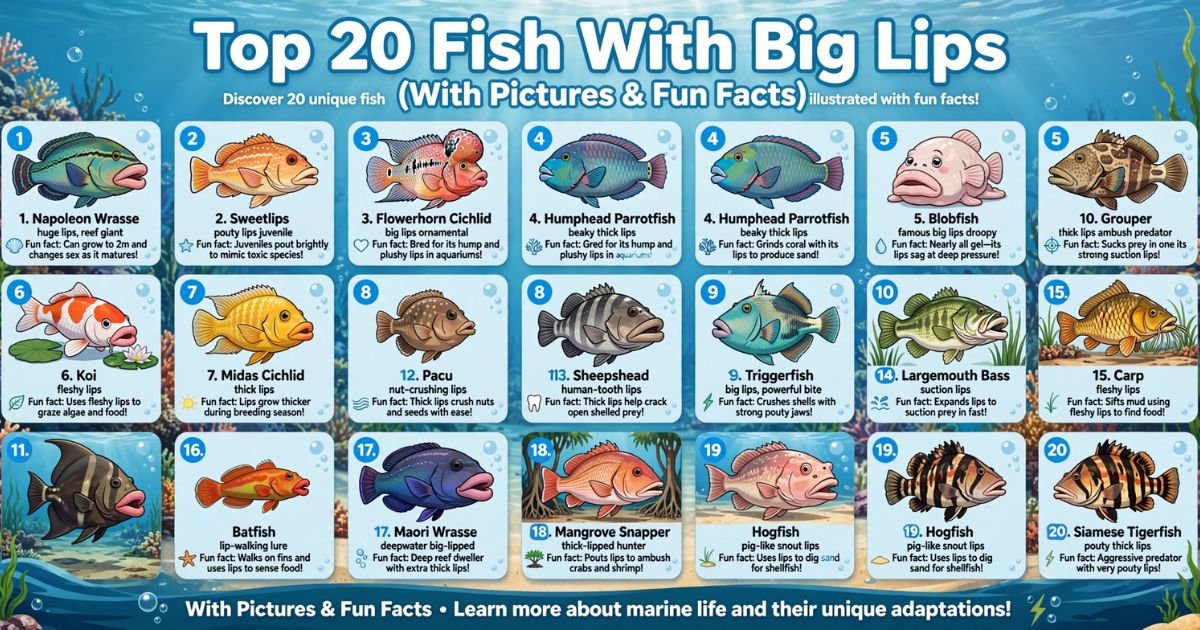
Ever wondered what fish would steal the show at a beauty pageant? The captivating Fish With Big Lips would undoubtedly take the crown! From vibrant colours to quirky behaviours, these fish boast magnificent mouths and play crucial roles in their ecosystems.
We unveil the top 20 contenders in the big lips category, offering you an entertaining look at their lives and surprising characteristics.
List of Fish with Big Lips
Below is the list of animals that have big lips:
- Humphead Wrasse
- Red Snapper
- Sweetlips
- Common Pleco
- Red-Lipped Batfish
- Koi
- Surgeonfish
- Big-Lip Damselfish
- Giant Gourami
- Stonefish
- Asian Sheepshead Wrasse
- Parrotfish
- Angelfish
- Kissing Gourami
- Carp
- Triggerfish
- Piranha
- Sarcastic Fringehead
- Giant Grouper
- Suckermouth Catfish
Humphead Wrasse
Scientific Name: Cheilinus undulatus
The Humphead Wrasse, famously known as the big lip fish, is a marvel of the marine world. With its vibrant colors and distinctively large lips, this species captivates divers and plays a crucial role in maintaining the health of coral reefs.
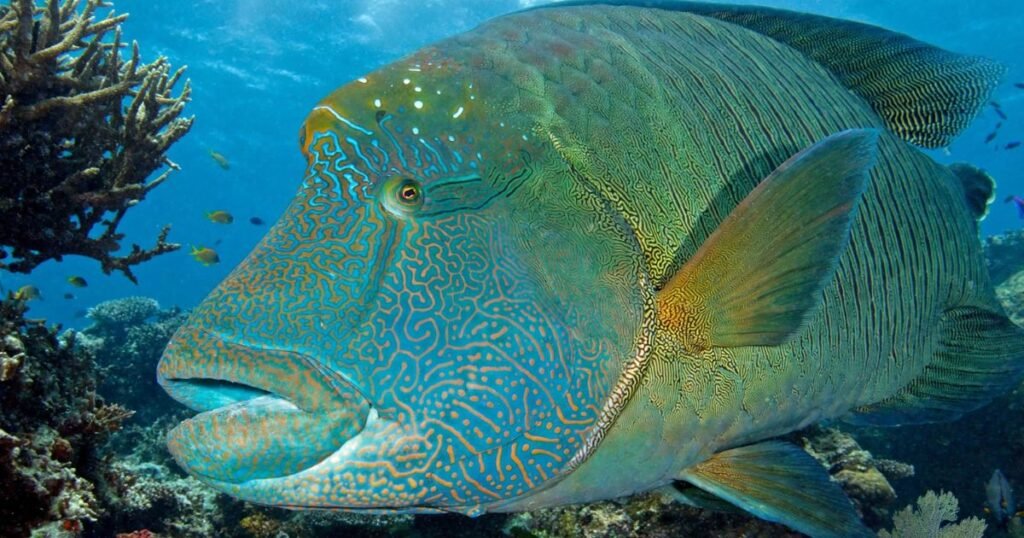
These gentle giants can weigh over 400 pounds and live up to 30 years, showcasing a unique life span that allows them to become integral parts of their ecosystems.
What truly sets the Humphead Wrasse apart is its behaviour. Unlike many fish that shy away from human interaction, this species often exhibits curiosity, approaching divers with a boldness that can be both surprising and enchanting.
Red Snapper
Scientific Name: Lutjanus campechanus
Red Snapper, known for its striking appearance and delicate flavour, is a mesmerizing fish with a big lower lip that draws both seasoned chefs and adventurous home cooks alike. This distinctive feature isn’t just for looks; it helps the snapper forage for crustaceans and small fish hidden in rocky crevices.
The red snapper’s vibrant hue, ranging from rosy pink to deep red, makes it a showstopper at any seafood market or dinner plate, instantly elevating the visual appeal of any dish.
What sets red snapper apart in the culinary world is its delightful taste and its versatility. Whether grilled, baked, or pan-seared, this fish absorbs flavors beautifully, allowing for an array of culinary creativity.
Sweetlips
Scientific Name: Plectorhinchus
The Sweetlips, commonly referred to as big lipped fish, captivate both divers and aquarium enthusiasts with their vibrant colors and unique facial features. These striking fish can transport you to vibrant coral reefs where they dart between anemones and corals, showcasing their signature oversized lips.
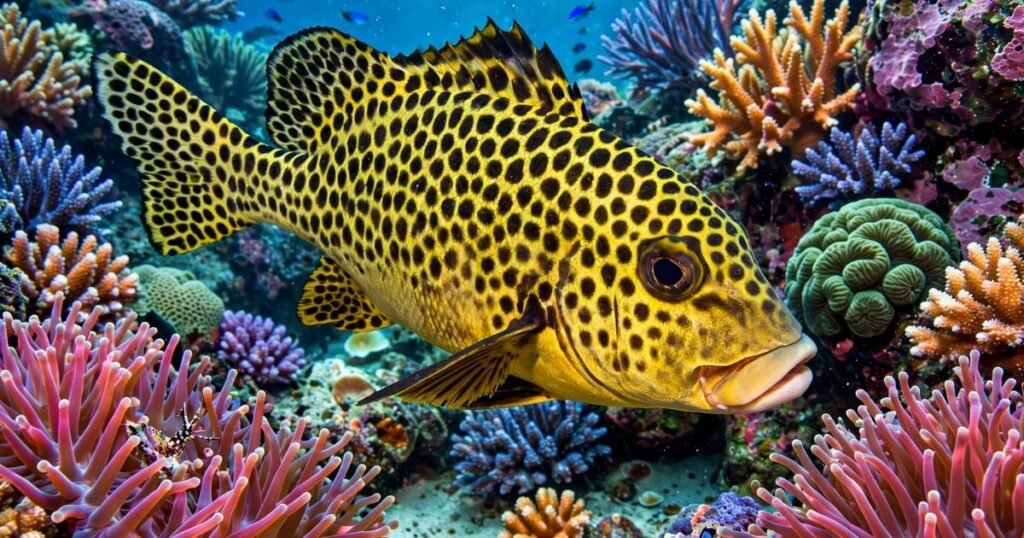
The bold markings and iridescent scales are just for show; they play a crucial role in communication and mating rituals. The Sweetlips might seem enchanting, they are also a vital component of their ecosystem.
Their feeding habits help maintain the balance of the reef environment, as they consume algae and small invertebrates. These social fish often gather in schools, exhibiting fascinating group dynamics that are both playful and strategic.
Common Pleco
Scientific Name: Hypostomus plecostomus
The Common Pleco may seem like just another aquarium inhabitant, but its unique characteristics and behaviors reveal a much richer story. Those big fish lips aren’t just for show they serve a vital purpose.
These specialized mouths allow Plecos to graze on algae, keeping your tank clean while simultaneously enjoying a diet that’s high in fiber. This makes them a fantastic biological filter, naturally contributing to your aquarium’s ecosystem.
As these fish mature, they can grow surprisingly large, often exceeding two feet in length. This growth demands careful consideration for tank size, making them unsuitable for smaller setups.
READ MORE: Discover Top 10 Animals Without Tails (With Photos)
Red-Lipped Batfish
Scientific Name: Ogcocephalus darwini
The Red-Lipped Batfish is truly a marvel of nature, captivating marine enthusiasts with its striking features. These fish with big eyes and big lips seem almost cartoonish, making them an unforgettable sight in the depths of the ocean.
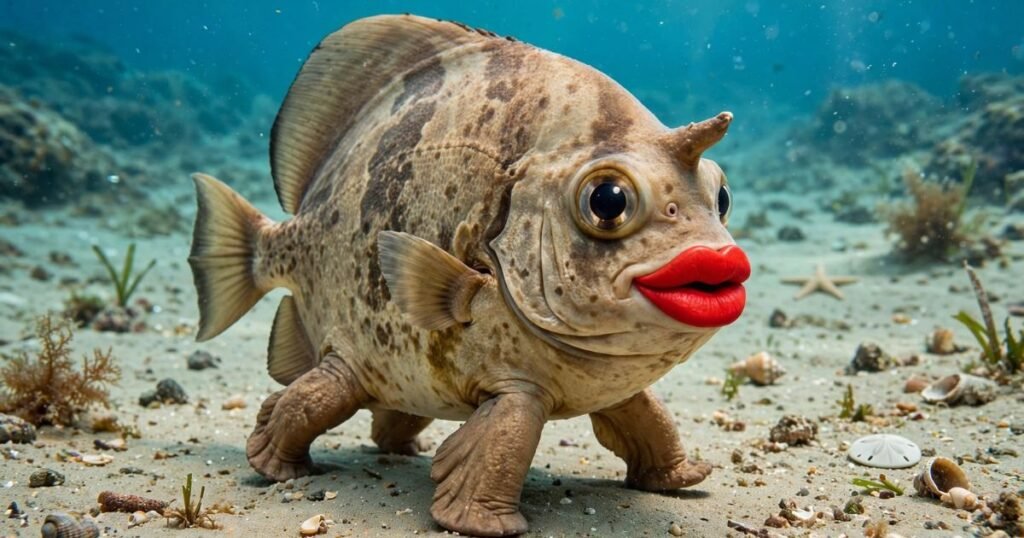
Their large, expressive eyes give them an almost endearing quality, while their vibrant, crimson lips invite comparisons to flamboyant characters straight out of a storybook.
This unique look serves a greater purpose, attracting potential mates and warding off predators in the vast underwater world. Many fish that gracefully glide through water, these batfish prefer to “walk” along the ocean floor using their modified pectoral fins.
Koi
Scientific Name: Cyprinus rubrofuscus
Koi are ordinary fish with big lips; they are living art. Their vibrant patterns and colors transform any garden pond into a peaceful oasis. Beyond beauty, Koi carry significant cultural symbolism, embodying perseverance and strength in Japanese tradition.
These creatures are revered, often representing good fortune and prosperity, making them more than mere decoration. One fascinating aspect of Koi is their impressive lifespan; with proper care, they can live for decades, some even reaching over 200 years! This longevity adds depth to their allure, turning Koi into cherished family members.
Surgeonfish
Scientific Name: Acanthurus
The surgeonfish, with its eye-catching colors and unique features, captivates marine enthusiasts and casual observers alike. Among its most fascinating traits is the big lip fish aspect, where its pronounced, fleshy lips serve a crucial role in foraging.
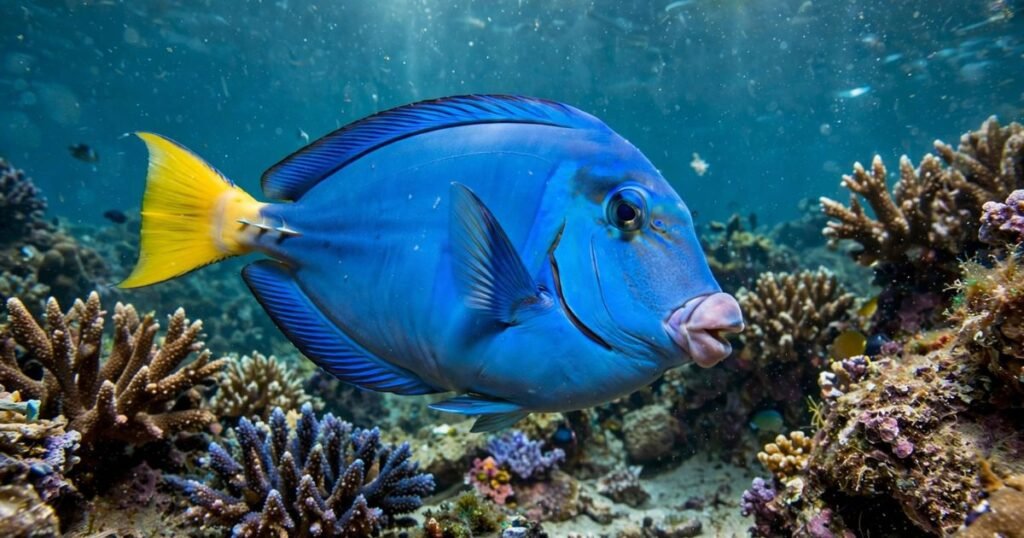
These lips, often mistaken for mere aesthetic flair, enable surgeonfish to expertly graze on corals and algae, showcasing their adaptation to an ecological niche that few can rival.
Diving deeper into their behaviour, surgeonfish exhibit a remarkable social structure, often seen schooling in vibrant, dynamic groups. This offers protection from predators and enhances their feeding efficiency.
Big-Lip Damselfish
Scientific Name: Cheiloprion labiatus
The Big-Lip Damselfish is a vibrant marvel of the marine world, showcasing striking blue hues and, of course, its remarkably prominent lips. But there’s more than meets the eye! This fish isn’t just here for looks; it plays a crucial role in coral reef ecosystems by fiercely defending its territory against intruders.
Its boldness and tenacity are both captivating and essential for maintaining the balance of underwater habitats.
These fish are primarily herbivorous and feed on algae, they exhibit some surprising behaviors related to what eats ants. In certain environments, these damselfish have been observed nibbling on tiny invertebrates that drift into their territories, illustrating their adaptability.
Giant Gourami
Scientific Name: Osphronemus goramy
The Giant Gourami is not just a stunning aquatic specimen; it’s a fascinating creature that boasts intelligence and personality. This fish exhibits remarkable adaptability, allowing it to thrive in a variety of freshwater habitats across Southeast Asia.
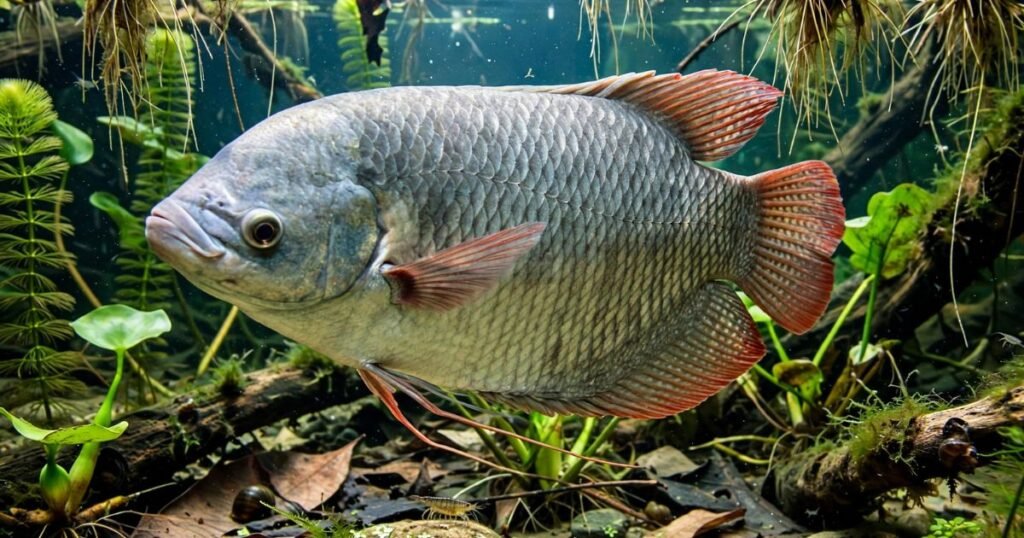
What truly sets the Giant Gourami apart is its unique behaviour, often likened to intriguing ant predators in their communal strategies. Like ants coordinating foraging, these fish display a social structure that emphasizes cooperation within their groups, showcasing a level of social intelligence that is rarely seen in freshwater species.
They are capable of breathing air, which allows them to dwell in oxygen-depleted waters where many other fish would struggle. This adaptability highlights their resilience and allows them to dominate their habitats, similar to how effective ant predators secure their territories.
Stonefish
Scientific Name: Synanceia verrucosa
These are masterful ambush predators, blending seamlessly into their rocky seafloor habitats. Known as one of the world’s most venomous fish, they wield a potent sting capable of causing excruciating pain to any unsuspecting creatures that come too close.
What’s fascinating is their dietary strategy: while they primarily feast on smaller fish and crustaceans, their unique hunting technique mirrors that of some animals that eat ants. The stonefish’s venomous spines serve as a defense mechanism and play a role in their predatory lifestyle.
When threatened, they can deliver a warning, their real prowess lies in their sheer ability to ambush prey. This predatory intelligence forces us to reconsider the adaptations that allow some creatures, like stonefish, to thrive in highly competitive environments.
ALSO READ: Top 15 Happiest Animals in The World (With Images)
Asian Sheepshead Wrasse
Scientific Name: Semicossyphus reticulatus
The Asian Sheepshead Wrasse is a true marvel of the ocean, boasting both vibrant colors and fascinating behaviors. Known for its remarkable ability to change sex, this fish can transition from female to male, a unique trait that ensures the survival of its species in fluctuating populations.
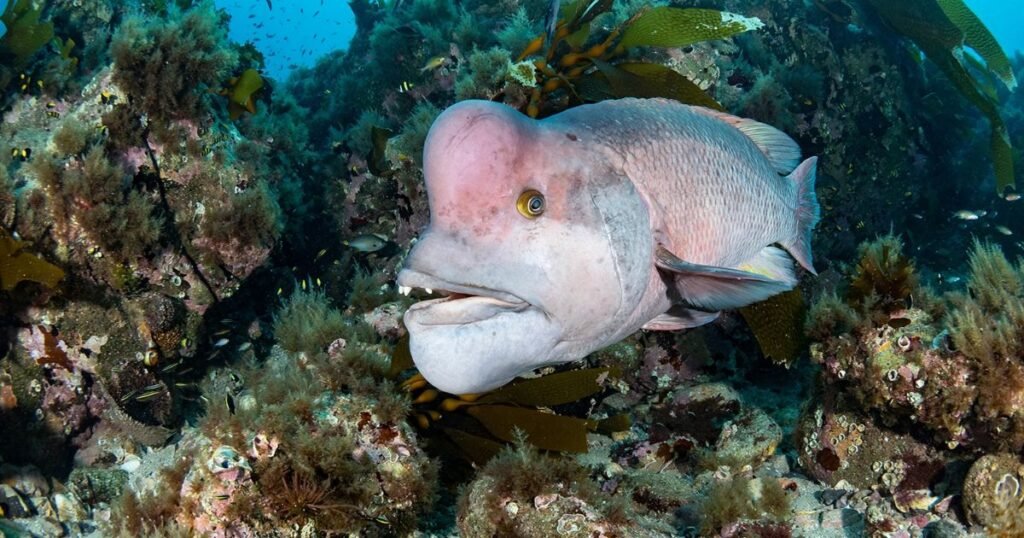
Observing this transformation is like witnessing nature’s intricate dance, as the wrasse changes its physical appearance and adapts its social role within the reef community. Delving into their diet, these fish play an essential role in the ecosystem, often preying on smaller invertebrates.
Their powerful jaws can crush coral and shells, making them formidable hunters. They’re isolated predators; the ecological balance they maintain allows various organisms to thrive.
Parrotfish
Scientific Name: Scaridae
These are the vibrant architects of coral reefs. Their bright hues and unique beak-like teeth allow them to graze on algae, which keeps coral healthy and thriving. What’s truly fascinating is their role in reef sustainability; by munching on algae, parrotfish control its growth, ensuring that corals can flourish in a balanced ecosystem.
This behaviour supports marine life and helps maintain the reef’s structural integrity. Parrotfish have a remarkable adaptation sleeping in a mucous cocoon at night!
This slimy shield protects them from predators, creating an enchanting spectacle in the underwater realm. While many creatures play their part in the ecosystem, few can claim such a transformative impact.
Angelfish
Scientific Name: Pterophyllum
These are captivating for their vibrant colours; they also play a crucial role in their ecosystem. These mesmerizing creatures exhibit a fascinating social structure and behaviour, often forming hierarchies that mirror small communities.
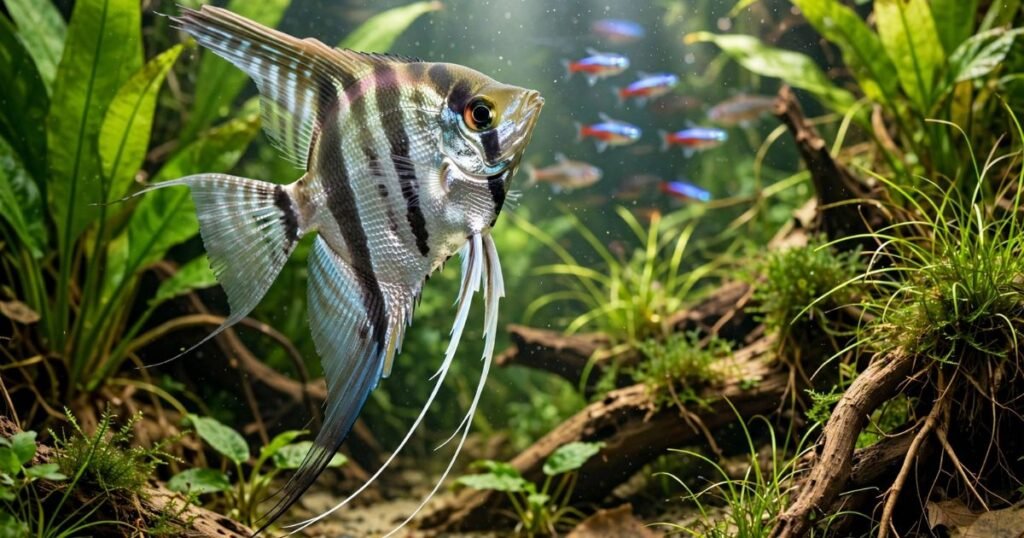
Many fish, angelfish have distinct personalities, displaying traits of curiosity and even affection towards their keepers. Their diet consists mainly of smaller aquatic organisms, making them opportunistic feeders.
In contrast to what you might think, while they might not directly interact with insects, they do contribute to a balanced ecosystem that includes predators like dragonfly larvae. These predators thrive in environments where angelfish roam, demonstrating how interconnected aquatic life can be.
Kissing Gourami
Scientific Name: Helostoma temminckii
These, with their unique mouth shape and behaviours, showcase fascinating social interactions that mimic the gentle pecking of courtship. These vibrant fish can often be spotted engaging in a playful display of “kissing,” where they touch mouths as if communicating or asserting dominance.
This intriguing behavior leaves many aquarists questioning: Could there be more to these interactions? Research suggests that their pecking is not merely playful but also a way to establish hierarchies within their group.
In captivity, Kissing Gourami thrive in well-planted tanks that mimic their natural habitats. Creating a serene environment fosters their well-being and encourages breeding behaviors. An unexpected discovery among aquarists is their surprising adaptability; they can coexist with various fish species, sharing the tank’s tranquility
Carp
Scientific Name: Cyprinus carpio
These often associated with quiet ponds and serene waterways, harbor a treasure trove of ecological significance. These resilient fish play a pivotal role in maintaining aquatic ecosystems by controlling weed growth and promoting a balanced habitat.
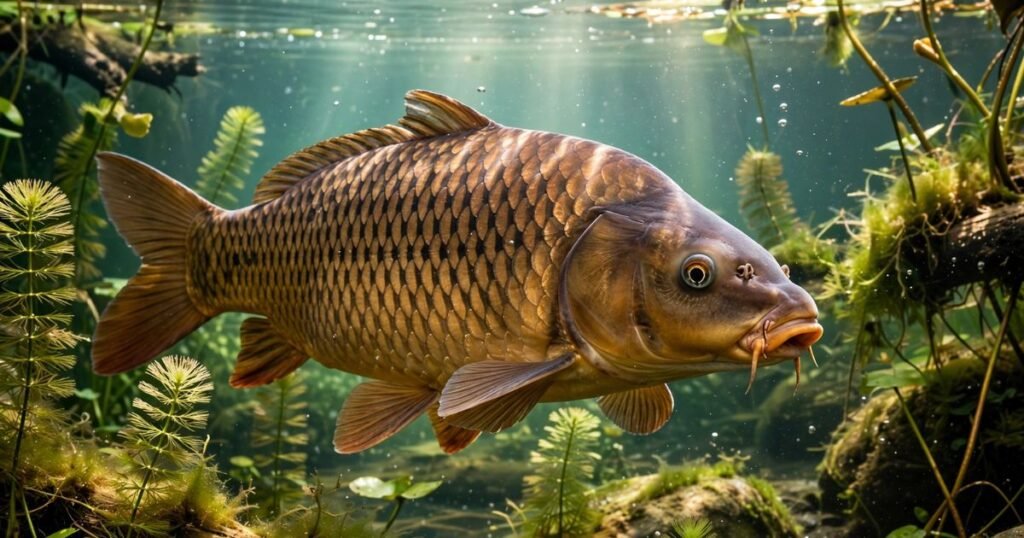
Their bottom-feeding habits help aerate sediments, making them crucial for the health of aquatic plants. Let’s pivot for a moment: what insects eat ants? Such predators can be surprisingly illuminating when considering the interconnectedness of ecosystems.
As carp impact their environments, insects like spiders and certain beetles exhibit fascinating behaviors that keep ant populations in check.
Triggerfish
Scientific Name: Balistidae
These are fascinating marine creatures known for their unique behavior and striking appearances. These vibrant fish are often seen in coral reefs, where they exhibit an intriguing mix of aggression and intelligence.
What sets them apart in the underwater world is their ability to use their powerful jaws to crush hard-shelled prey, including sea urchins and crustaceans. This adaptability allows them to thrive in diverse environments, showcasing a remarkable example of evolution in action.
Triggerfish may actively hunt insects like ants, they reveal the interconnectedness of marine ecosystems. Creatures such as birds, lizards, and certain mammals often target ants as a primary food source, highlighting a stark contrast to the aquatic feeding habits of triggerfish.
Piranha
Scientific Name: Serrasalmus
These are often mischaracterized as mindless killers, embody an intricate blend of ecological marvel and social behavior. These surprisingly intelligent fish possess a synergy within their schools that showcases ferocity and strategic hunting.
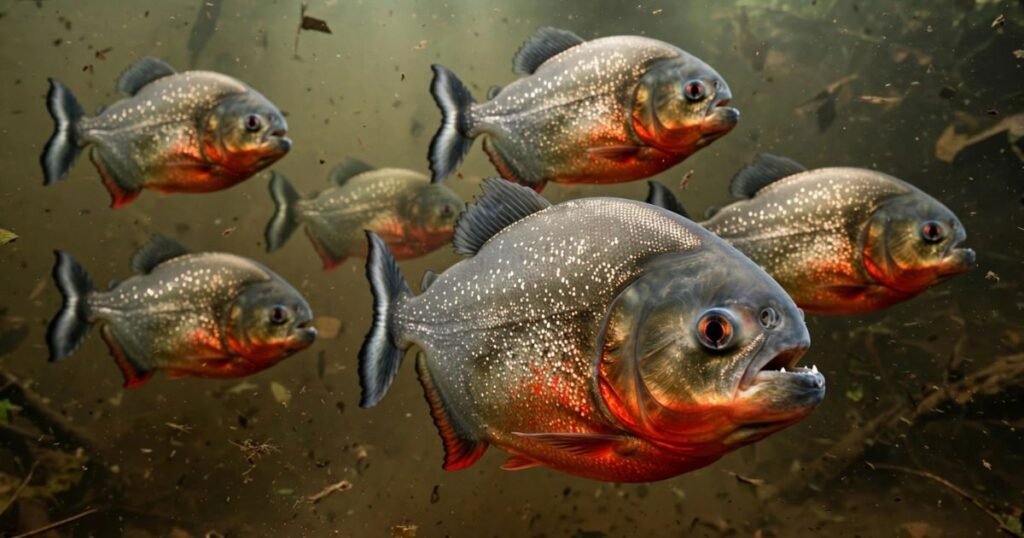
Their sharp teeth and powerful jaws are symbols of their role as apex predators in the Amazon river basin, yet they also play a critical role in maintaining the balance of their aquatic environment.
Piranhas have surprising dietary flexibility. In a fascinating twist, this adaptability leads to intriguing questions about what eats ants in their habitat; some piranhas have been observed consuming insect larvae and crustaceans that share their riverine environment.
Sarcastic Fringehead
Scientific Name: Neoclinus blanchardi
The Sarcastic Fringehead is a marine oddity; it’s a vibrant testament to the quirks of evolution. Imagine a creature whose mouth is a flamboyant display, opening wider than its body to challenge rivals and attract mates.
This captivating fish utilizes its jaw like a theatrical curtain, revealing colors and patterns that could easily rival any tropical beach. While you might envision a calm underwater world, the Fringehead’s fierce territorial battles are a spectacle of nature’s drama.
In the grand mosaic of the animal kingdom, the Sarcastic Fringehead plays a unique role,it certainly isn’t alone in its quirky habits. Animals that eat ants, like the anteater or the pangolin, also showcase nature’s creativity in survival tactics.
Giant Grouper
Scientific Name: Epinephelus lanceolatus
The Giant Grouper, a true titan of the sea, boasts impressive dimensions, often exceeding 8 feet and weighing over 800 pounds. These majestic creatures roam the depths of coral reefs and rocky outcrops, where they command respect as apex predators.
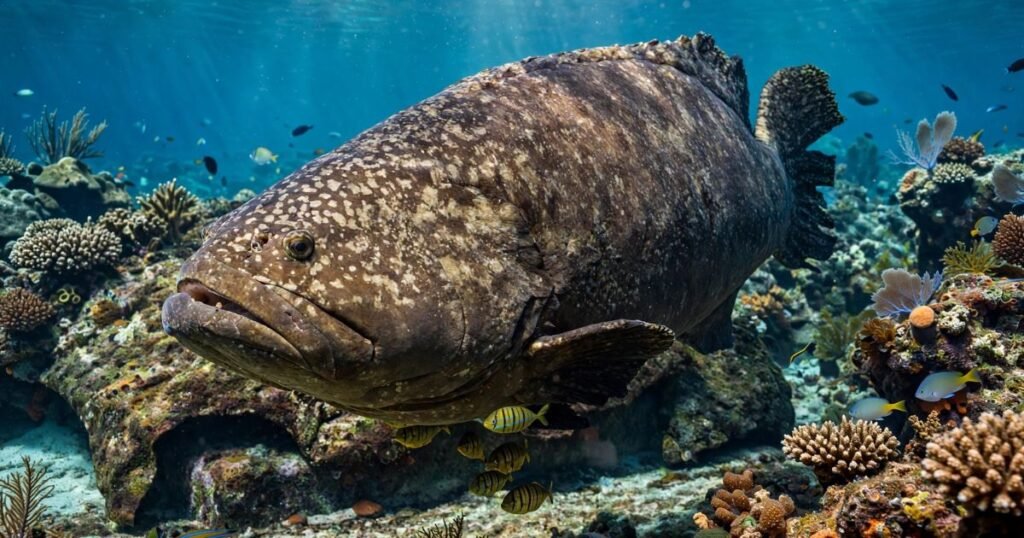
What’s fascinating is their unique hunting strategy; rather than pursuing fast prey, they rely on ambush techniques, showcasing a blend of patience and power. While discussing food chains, one might ponder “what animal eats ants” as a comparison.
As ants play crucial roles in terrestrial ecosystems, the Giant Grouper plays a pivotal role in its environment. Their diet primarily consists of smaller fish and crustaceans, they’ve been observed consuming whatever crosses their path, including unsuspecting sea turtles.
Suckermouth Catfish
Scientific Name: Hypostomus plecostomus
The Suckermouth Catfish, renowned for its unique feeding habits, captivates aquarists and nature enthusiasts alike. With its distinct suction-cup mouth, this freshwater marvel thrives in rivers and lakes across South America. What sets it apart?
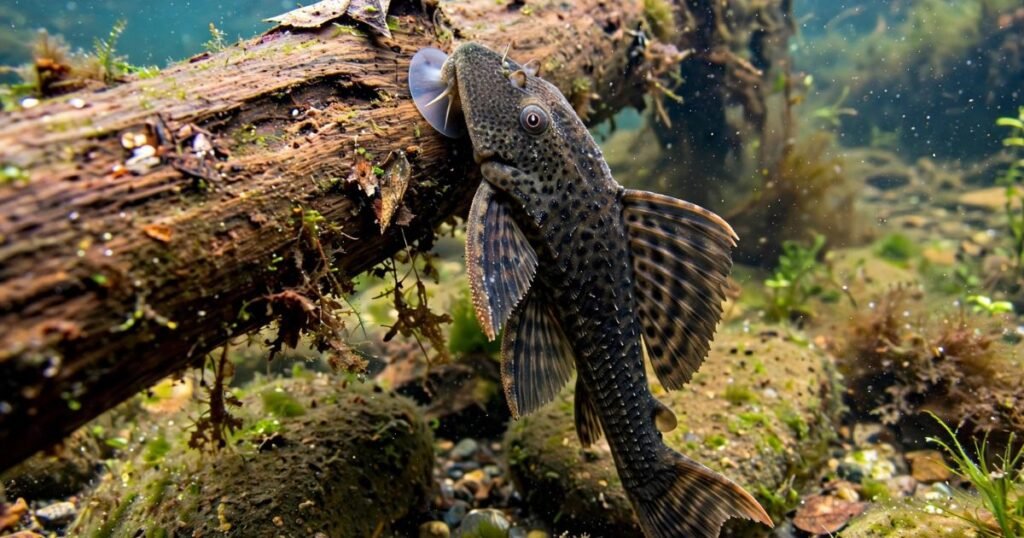
Its ability to scrape algae and detritus off surfaces, playing a critical role in aquatic ecosystems. A healthy balance in their habitats, these catfish ensure a cleaner environment, benefiting fish and plants alike.
Here’s a curious twist: as you dive deeper into their world, you might wonder why not consider the broader ecosystem? Just as do birds eat ants to control pest populations, these catfish manage algae, showcasing nature’s intricate web of connections.
Final Thoughts
The world of fish is truly fascinating, especially when we focus on those species boasting big lips. These unique adaptations enhance their beauty and play a crucial role in their survival and feeding strategies.
The colorful and vibrant parrotfish to the mysteriously intriguing triggerfish, each species offers a glimpse into the incredible diversity of aquatic life. We hope these fun facts and stunning pictures have deepened your appreciation for these extraordinary creatures. Dive into the wonders of marine life and share your favorite fish with big lips!
FAQs
What are the Top 10 Most Popular Fish?
The top 10 most popular fish preferences can vary by region and use, but there’s a consensus on several favourites worldwide. Salmon leads the pack, celebrated for its rich flavour and health benefits, especially due to its high Omega-3 content.
What is the Fish with big Lips Called?
The fish you’re thinking of is most likely the Lipstick Tetra or the Lumpfish. The Lipstick Tetra is known for its vibrant colours and distinctively full lips, making it a popular choice for aquarium enthusiasts. These small, tropical fish are native to the Amazon River basin and are celebrated for their playful nature.
What kind of Fish has big Teeth and Big Lips?
A fish with big teeth and big lips, look no further than the Pacu! Often mistaken for its cousin, the piranha, the Pacu boasts broader jaws and a more herbivorous diet. These freshwater fish, found primarily in South America, are known for their impressive dentition, resembling human teeth, which are adapted for crushing nuts and seeds.
What Fish has Lips?
Fish with Lips? You might be surprised to learn that some fish do indeed have noticeable lips! One of the most famous examples is the Mullet, which has thick, fleshy lips that help it forage for food in sandy bottoms. Another noteworthy contender is the Parrotfish, recognized for its beak-like lips that they use to scrape algae off coral reefs.
What are the Main Types of Fish Lips?
Fish lips vary significantly across species, adapting to their environments and feeding habits. Lips can be categorized into a few main types: thin, thick, and fleshy. Thin lips are common in predatory fish, allowing them to quickly snap up prey without obstruction. Examples include pike and bass, where the streamlined design aids in speed and agility.