Top 14 Birds That Eat Fish: Names, Facts & Pictures
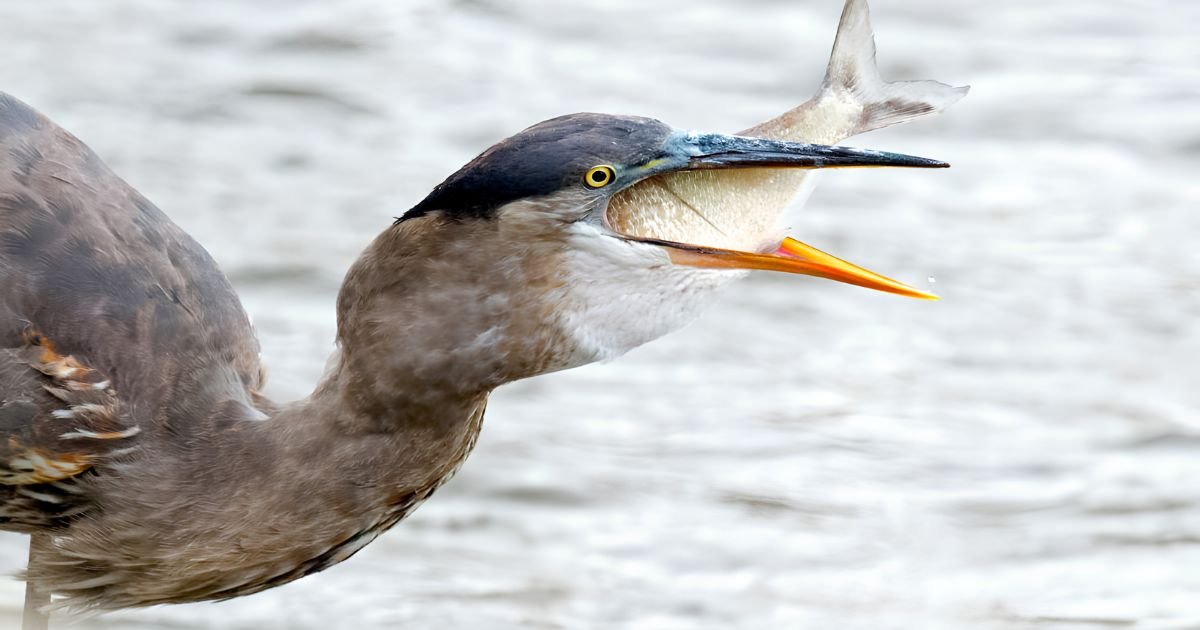
The natural world is full of fascinating relationships, and one of the most captivating is between Birds That Eat Fish and their watery prey. From majestic eagles to agile kingfishers, these birds have developed incredible hunting skills adapted to catching fish in lakes, rivers, and oceans.
Here, we’ll explore the top 14 species that thrive on a fish-based diet and reveal how they’ve mastered the art of fishing. By the end, you’ll gain a deeper appreciation do birds eat fish, and for these fishing birds avian predators.
List of Birds That Eat Fish
Below is the list of animals that eat fish:
- Osprey
- Great Blue Heron
- Cormorants
- Kingfishers
- Mergansers
- Penguin
- Bald Eagle
- Gannet
- Loons
- Atlantic Puffins
- Shoebill Stork
- Pelicans
- Albatross
- Common Tern
Osprey
Scientific Name: Pandion haliaetus
The osprey, commonly known as the “fish hawk,” is a remarkable bird that excels in hunting fish. With its sharp talons and keen eyesight, it can spot fish from high above and dive into the water at impressive speeds. This hunting skill makes ospreys the most efficient fish-eating birds in nature.
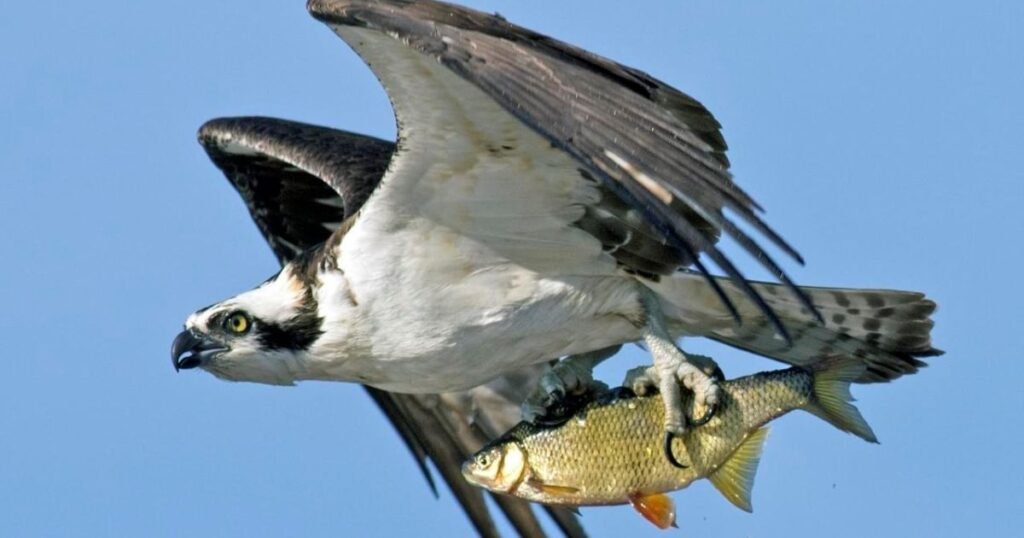
Beyond their hunting prowess, ospreys play a crucial role in the ecosystem. They help keep fish populations in check, which supports the overall health of aquatic habitats. Their long migratory journeys connect different ecosystems, highlighting the intricate balance of nature.
Observing an osprey in action showcases its beauty and reminds us of the important roles all creatures play in the environment.
Herons
Scientific Name: Ardea herodias
Herons, known scientifically as Ardea herodias, are remarkable hunters that blend grace with expert fishing skills. Their long legs allow them to wade quietly through shallow waters, and they can remain perfectly still for extended periods, awaiting the perfect moment to strike.
When they do move, they do so with surprising speed, using their sharp beaks to catch small fish before the prey even knows it is in danger.
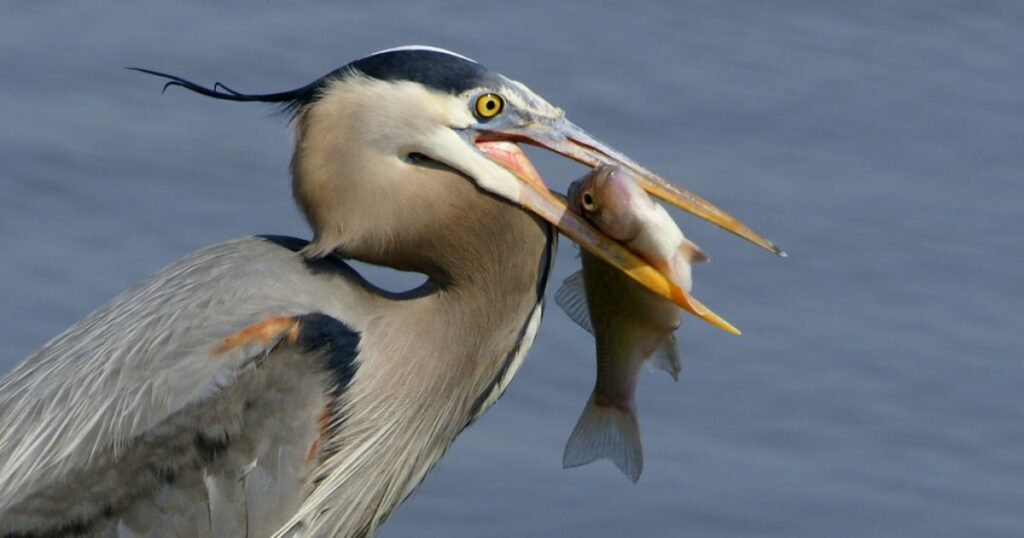
Beyond their impressive hunting technique, herons are vital to aquatic ecosystems. As apex predators, they help regulate fish populations, supporting a balanced environment. Their adaptability is striking; whether found in urban parks or remote wetlands, herons thrive wherever there is water.
This versatility highlights how interconnected our ecosystems are, showcasing the essential role each species plays in maintaining a healthy habitat.
Read More: Top 15 Cleanest Animals in The World (With Images)
Cormorants
Scientific Name: Phalacrocorax
Cormorants, scientifically known as Phalacrocorax, fish eating birds that are captivating birds renowned for their impressive fishing abilities. With their long necks and sleek bodies, they dive deep into the water to hunt fish, using their unique adaptation of being less buoyant to chase prey with incredible speed.
Unlike many other seabirds, they lack waterproof oils, which allows them to become heavy and submerged.
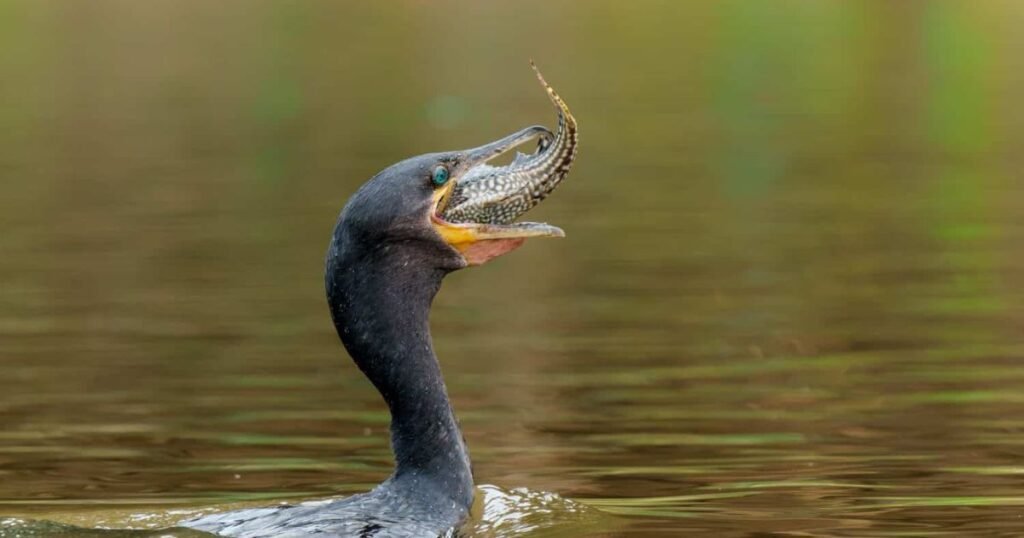
Watching cormorants hunt is truly fascinating; they often work in groups to corral schools of fish, displaying remarkable teamwork. After a successful hunt, they can be seen drying their wings on rocks or docks a necessary part of their post-dive routine.
By understanding cormorants and their role in the ecosystem, we can appreciate the delicate balance of predator and prey that sustains aquatic life.
Kingfishers
Scientific Name: Alcedinidae
Kingfishers, belonging to the family Alcedinidae, are known for their stunning colors and incredible fishing skills. With remarkable eyesight, they can spot fish from high above, perfectly timing their dives to snag a meal. Their streamlined bodies allow them to enter the water with minimal splash, making them efficient hunters.
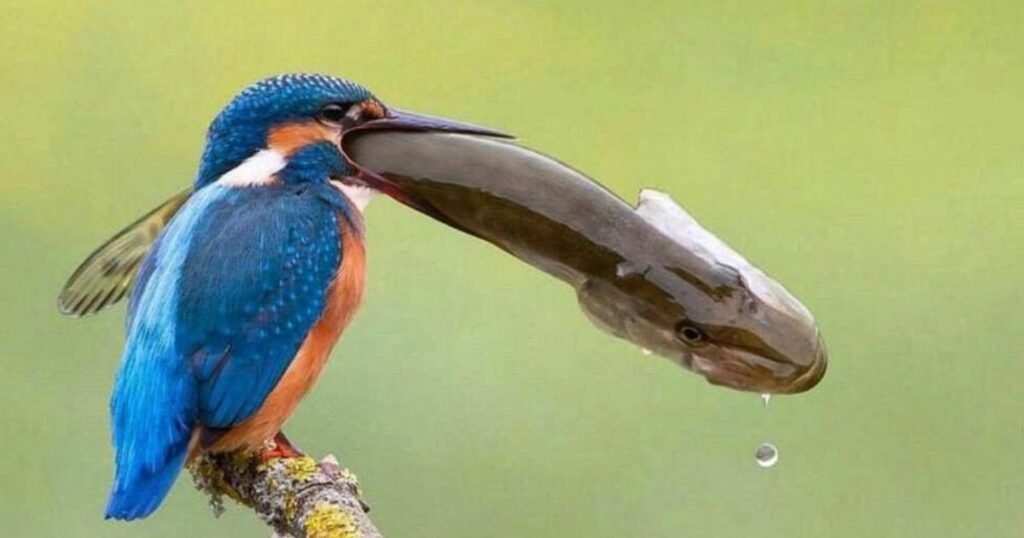
They use is “hovering,” where they pause mid-air to locate prey beneath the surface. Once a fish is spotted, they dive headfirst with impressive accuracy. Many kingfisher species are monogamous, sharing both nesting and hunting grounds with their partners, showcasing a unique social dynamic among these beautiful birds.
Read More: Discover 8+ Mammals That Cannot Jump (With Pictures)
Mergansers
Scientific Name: Mergus
Mergansers, often called “fish ducks,” stand out for their unique adaptation: slender, serrated bills designed for catching fish. This makes them expert divers, allowing them to navigate underwater with ease. Watching a merganser dive for fish can feel like witnessing a ballet, from the graceful plunge to the triumphant resurfacing.
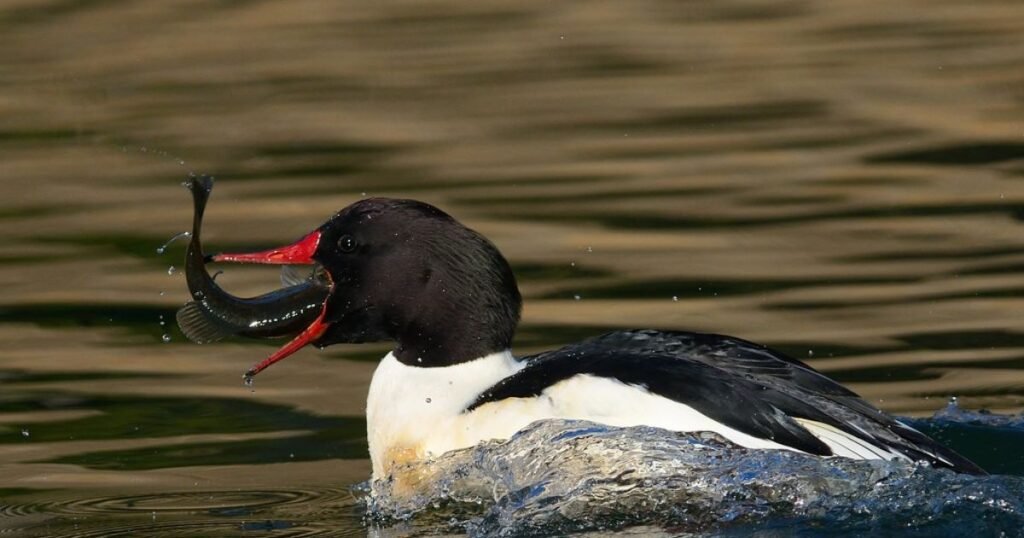
Their diet isn’t just limited to fish, though; they also eat aquatic invertebrates and smaller crustaceans. This adaptability is vital in changing environments where food sources can vary.
Mergansers are a great example of how wildlife can evolve and thrive despite challenges, showcasing nature’s remarkable ability to maintain balance.
Read More: Top 14 Animals That Eat Mice: Natural Predators (With Images)
Penguin
Scientific Name: Spheniscidae
Penguins are fascinating birds known for their unique adaptations to life in cold environments. Their streamlined bodies and powerful flippers make them exceptional swimmers, allowing them to dive deep and catch fish with ease. Equipped with excellent eyesight, they can spot prey even in murky waters, efficiently locating schools of sardines and krill.
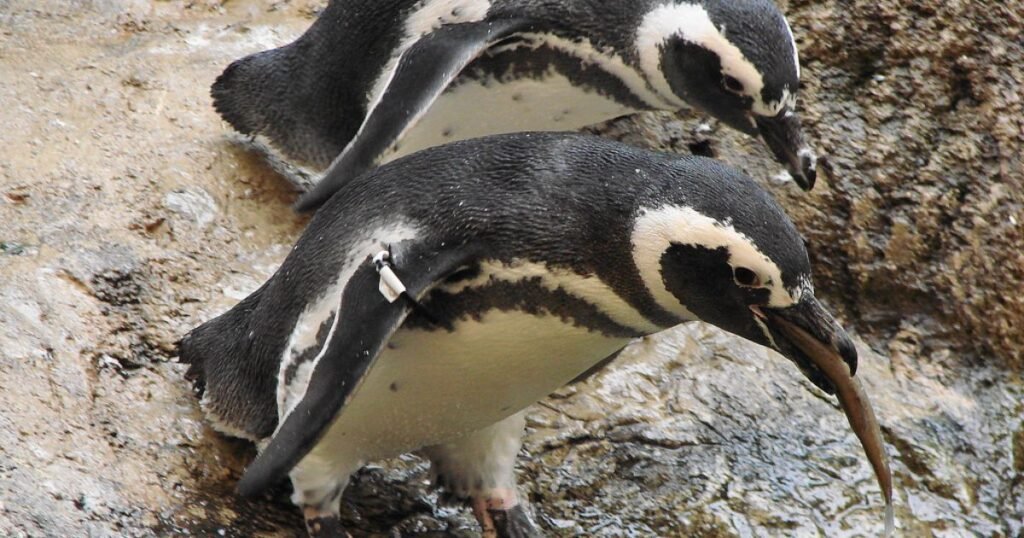
Penguins often hunt in groups using a technique called “bubble-net feeding.” By blowing bubbles, they can herd fish into tight clusters, showcasing their teamwork and intelligence.
As climate change impacts their habitats, their ability to adapt and find new food sources becomes crucial for their survival and the health of their aquatic ecosystems.
Bald Eagles
Scientific Name: Haliaeetus leucocephalus
Bald eagles, or Haliaeetus leucocephalus, are remarkable birds known for their striking white heads and impressive wingspans. These majestic raptors are expert hunters, using their sharp eyesight to spot fish from high above. They employ a technique called “plunge diving” to catch their prey, showcasing their agility and precision.
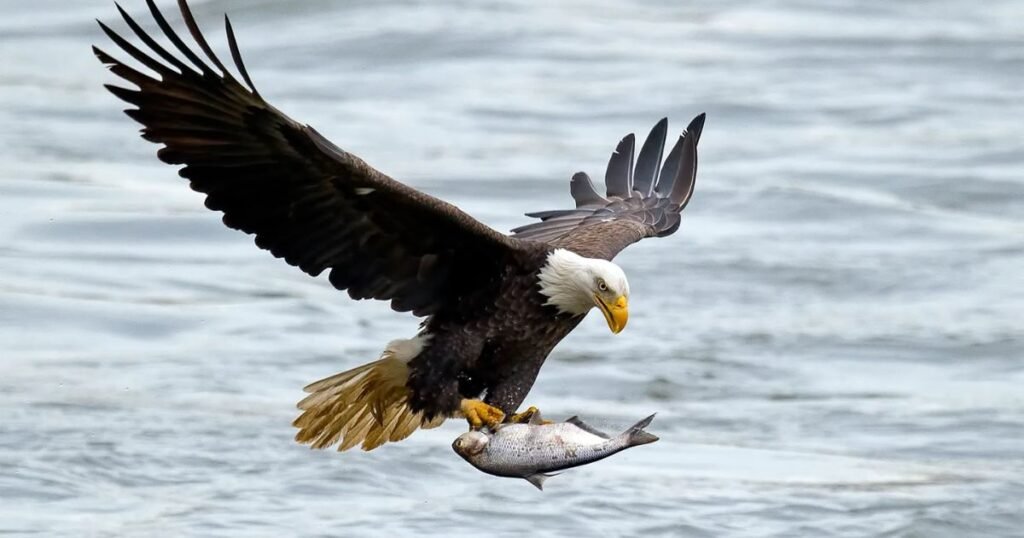
Interestingly, bald eagles are not just fish catchers; they are opportunistic feeders. When fish are hard to find, they may scavenge from seagull nests or eat carrion. This adaptability highlights their resourcefulness and the crucial role they play in maintaining balanced ecosystems.
Their presence often signals a healthy aquatic environment, reminding us of the need for conservation efforts.
Read More: Top 15 Dangerous Animals in The Philippines (With Images)
Gannet
Scientific Name: Morus
Gannets, scientifically known as Morus bird that eats fish, are incredible seabirds famous for their impressive fishing skills. With wingspans that can exceed six feet, they dive into the ocean from heights of up to 100 feet, making spectacular acrobatic moves in search of fish.
Their streamlined bodies and unique air sacs help cushion their dramatic entries into the water, allowing them to hunt efficiently.
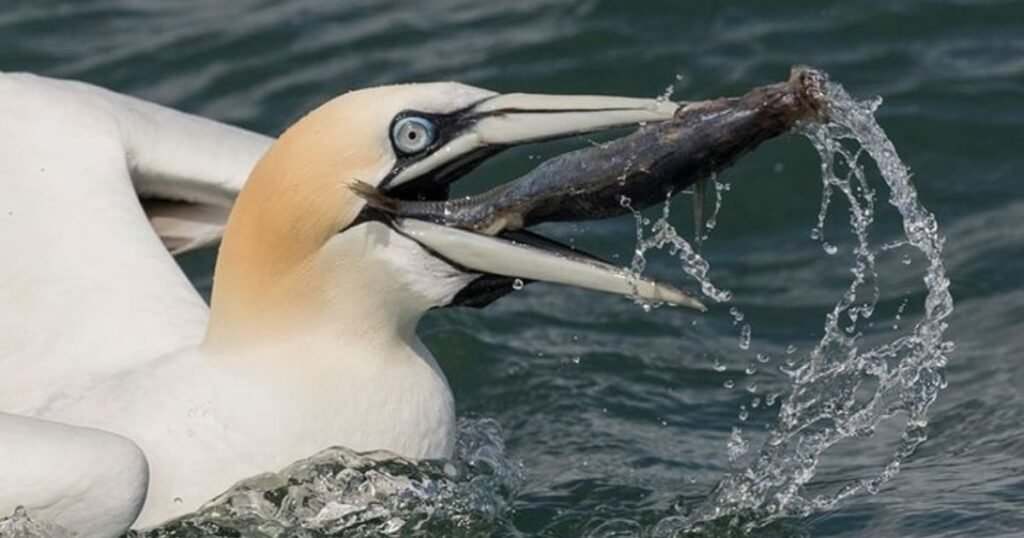
These birds also display fascinating social behaviors when they hunt in groups, often plunging into the water simultaneously to catch schools of fish. This teamwork boosts their success and conserves energy.
With their striking golden and white plumage, gannets are a breathtaking sight, embodying the beauty and complexity of life in marine ecosystems.
Loons
Scientific Name: Gavia
They are truly captivating birds, known for their eerie calls and impressive diving abilities. With the ability to dive deeper than 150 feet, they skillfully hunt for fish like perch and trout, using their sharp eyesight to track their prey underwater. Their hunting techniques demonstrate great agility, often leading to successful catches.
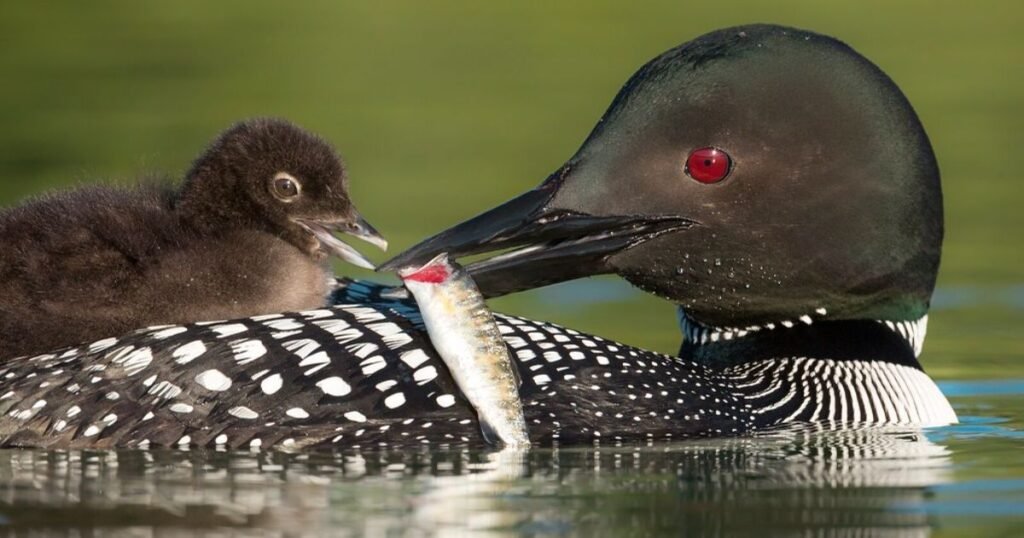
These fascinating creatures are also territorial, forming lasting bonds with specific foraging areas rich in fish. By maintaining these territories, loons play a crucial role in the ecosystem, helping to control fish populations in lakes and rivers. Their presence highlights their adaptability and emphasizes the importance of ecological balance.
Read More: Animals Like Skunks: 9 Unique Creatures (With Pictures)
Atlantic Puffins
Scientific Name: Fratercula arctica
Atlantic puffins, known for their vibrant beaks and charming personalities, are skilled hunters that dive deep into the ocean to catch fish like sand eels and herring. With the ability to hold onto several fish at once, sometimes up to ten, they truly showcase their unique adaptations for survival in a competitive environment.
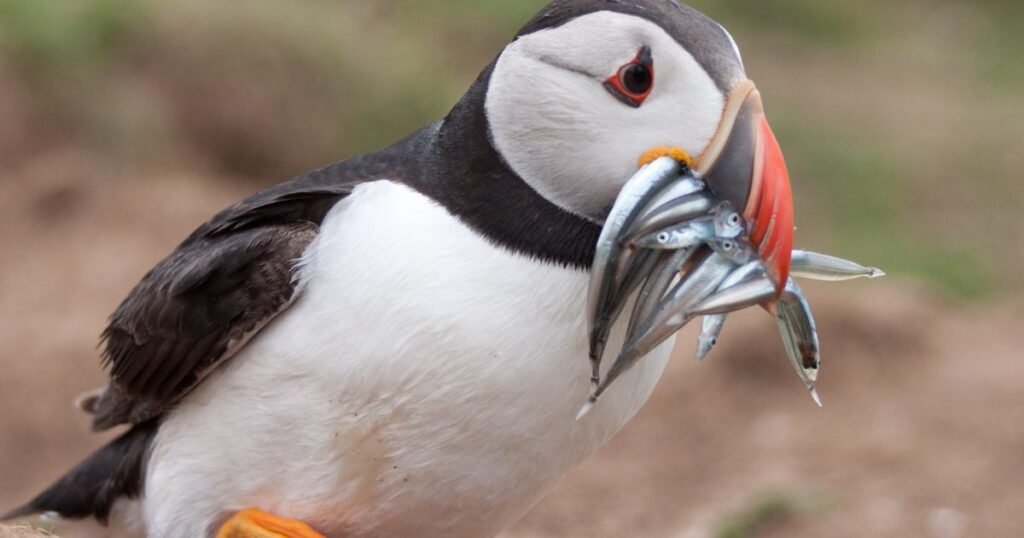
During breeding season, puffins return to coastal cliffs to nest in burrows, where both parents take turns caring for their chicks. This devoted parenting is a delightful sight, but these amazing birds face challenges from climate change and overfishing, which threaten their food sources and habitat. Protecting puffins and their ecosystem is crucial for maintaining the health of marine life.
Shoebill Stork
Scientific Name: Balaeniceps rex
The Shoebill Stork, known scientifically as Balaeniceps rex, is an incredible sight in Africa’s swamps, standing nearly five feet tall with its distinctive shoe-shaped bill. This remarkable design allows it to excel at catching fish like lungfish and tilapia, often remaining perfectly still like a statue until it strikes with impressive speed.
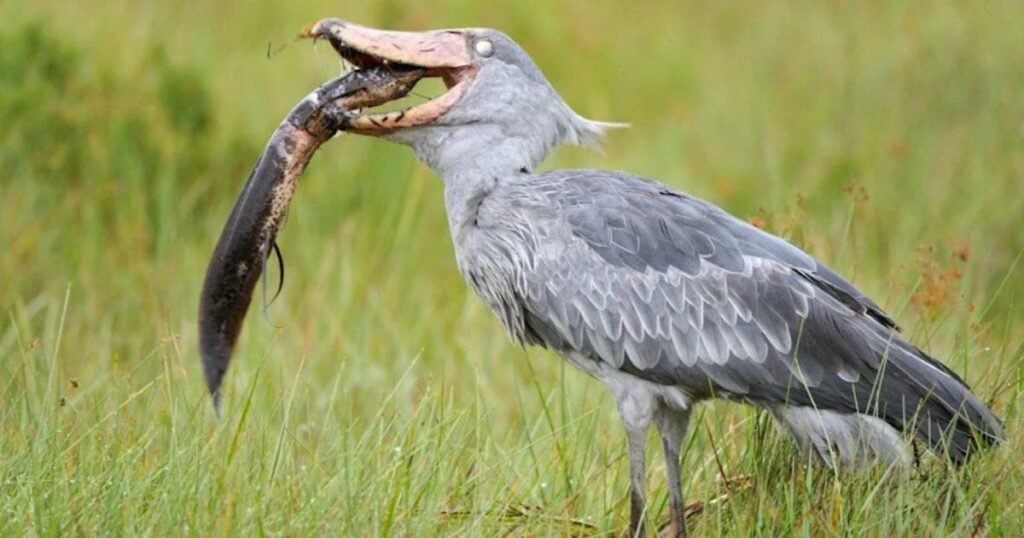
This bird is a skilled hunter and displays a curious and intelligent nature. Watching a Shoebill as it surveys its habitat or performs courtship rituals offers a unique insight into its complex social behaviors, making it a favorite among birdwatchers and nature enthusiasts alike.
Pelicans
Scientific Name: Pelecanus
Pelicans are remarkable birds known for their distinctive large bills and unique hunting techniques. Unlike other fish-eating birds that dive for their meals, pelicans often hunt in groups. This cooperative strategy helps them herd schools of fish into shallower waters, making it easier to catch their prey.
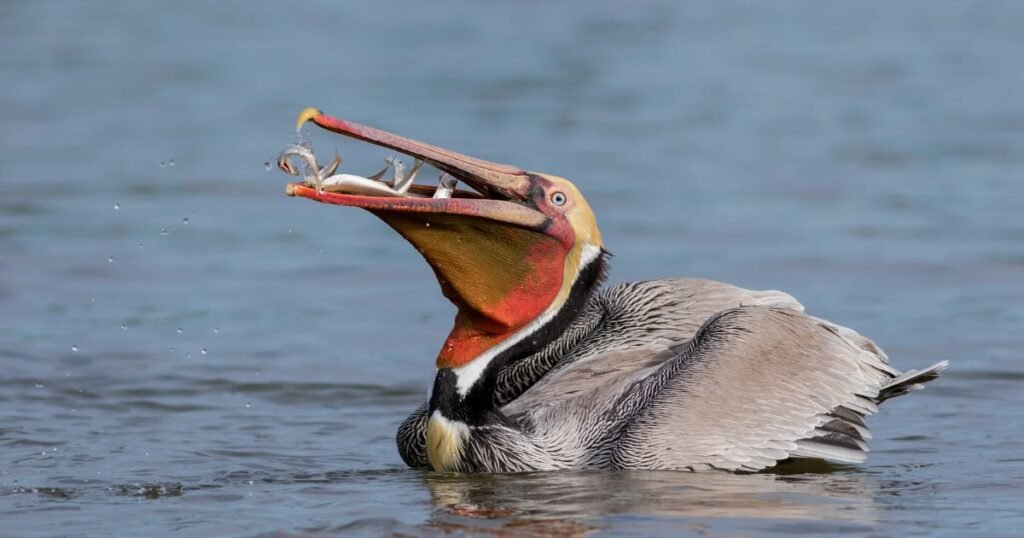
Their long bills double as natural nets, allowing them to scoop up fish and a variety of aquatic creatures. They have ability to adjust the throat pouch to match the size of the fish they catch. This adaptability showcases their evolution and intelligence, illustrating how pelicans have honed their feeding strategies to thrive in their environments.
Read More: 12 Amazing Animals That Live in Fields (With Pictures)
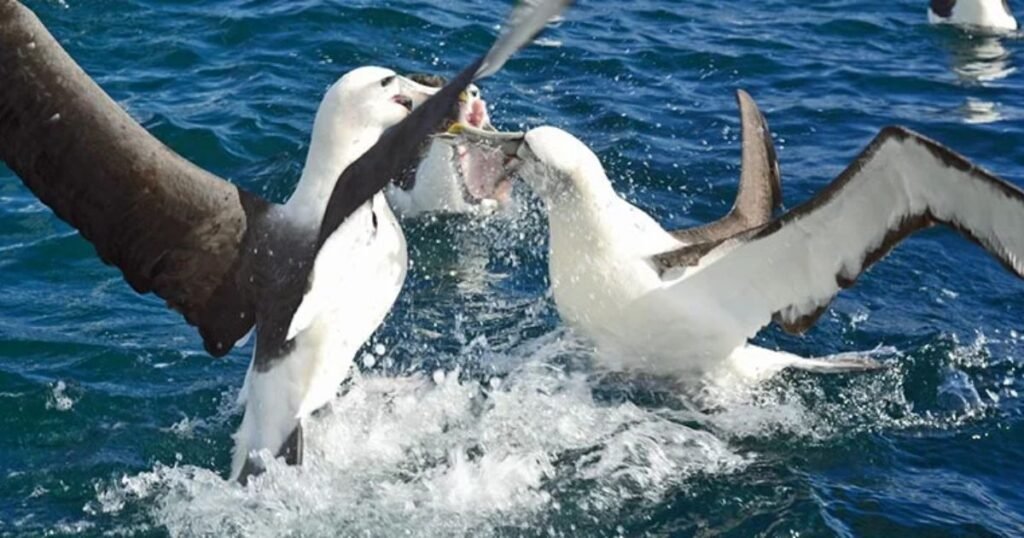
Albatross
Scientific Name: Diomedeidae
Pelicans are fascinating birds, known for their large bills and unique hunting techniques. Rather than diving for fish, they often hunt in groups, herding schools of fish into shallow waters to increase their chances of catching dinner. This cooperative behavior shows a remarkable level of intelligence and adaptability in the wild.
Their bills are not just for show; they double as natural nets, allowing pelicans to scoop up fish and other aquatic creatures. These birds can adjust the size of their throat pouch based on the size of the fish they catch, showcasing a clever adaptation that enhances their feeding efficiency.
This ability highlights how evolution shapes physical traits to help species thrive in their ecosystems.
Common Tern
Scientific Name: Sterna hirundo
The Common Tern, known scientifically as Sterna hirundo, is a remarkable bird famed for its impressive fishing skills and striking appearance. With its sleek body and distinctive black cap, it is often seen diving gracefully into the water, showcasing its powerful vision as it spots fish from great distances.
Their diet mainly consists of small fish like sand eels and minnows, but they can adapt to changing food sources, highlighting their survival instincts.
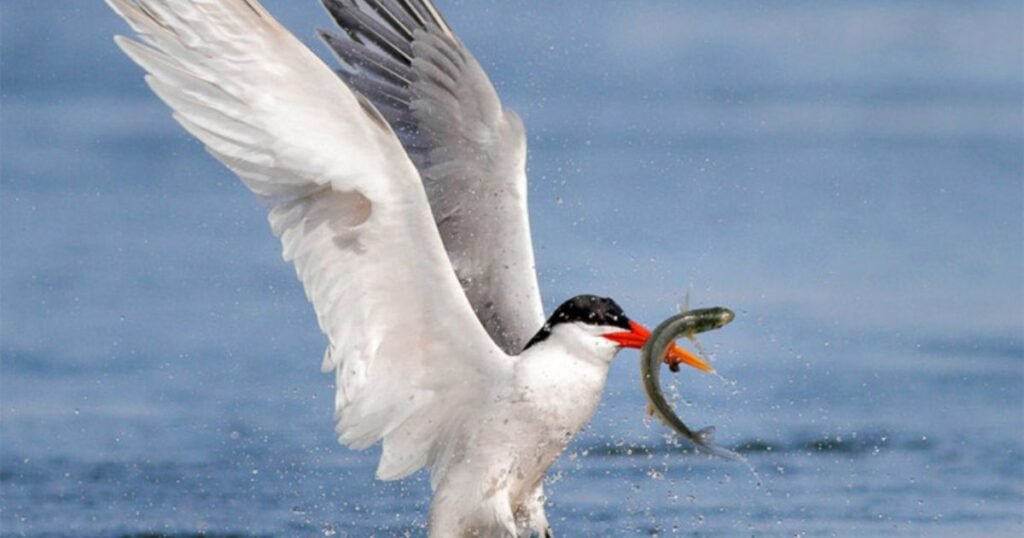
One of the most interesting aspects of Common Terns is their social hunting behavior. They often fish in groups, where the success of one bird can trigger a feeding frenzy among the rest.
This cooperative approach boosts their chances of catching food and emphasizes the strong social bonds within their colonies, making them a fascinating species to observe in the wild.
Final Thought
The world of Birds That Eat Fish is filled with incredible diversity and captivating behaviors. Each species plays a vital role in the ecosystem, helping to maintain a balance between aquatic life and terrestrial environments.
By observing these birds in their habitats, we can gain a deeper appreciation for their unique skills and the importance of conserving their environments. Whether you’re a birdwatcher or just a nature enthusiast, these fish-eating avians offer endless inspiration. Let’s cherish and protect these magnificent creatures for future generations to enjoy.
FAQ’s
What Kinds Of Birds Eat Fish?
Several types of birds are known for eating fish, including mergansers, double-crested cormorants, great blue herons, and various gull species. These birds play a significant role in the ecosystem, impacting the survival rates of fish like juvenile salmon and steelhead as they migrate.
What Bird Eats Fish?
Many birds are known for eating fish, but some of the most notable include herons, egrets, and ospreys. These birds have adapted to catch fish in various water habitats, using their sharp beaks and keen eyesight to hunt effectively.
What Is The Big Bird That Eats Fish?
The big bird you’re referring to is likely the shoebill. This striking bird, known for its large, shoe-shaped bill, primarily eats fish but also hunts other wetland animals.
What Bird Mainly Eats Fish?
Many birds primarily eat fish, including osprey, cormorants, and kingfishers. These birds have evolved unique hunting skills and adaptations to catch fish from water efficiently.