Top 16 Animals With Pouches (With Pictures & Interesting Facts) 2026
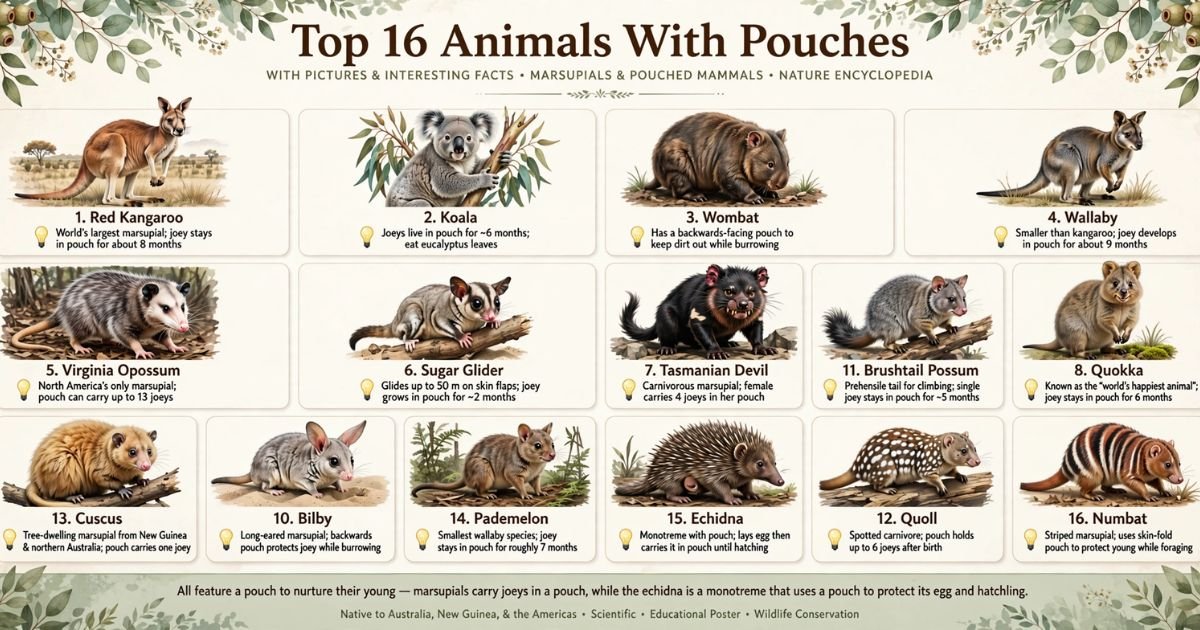
Did you know that some of the most fascinating creatures on our planet carry their young in pouches? Animals with pouches aren’t just about kangaroos, they’re a diverse group that includes marsupials and even some unique reptiles!
The top 16 animals with pouches, complete with stunning pictures and intriguing facts that reveal why these adaptations are so important. Get ready to expand your knowledge and appreciate these incredible species!
List of Animals With Pouches
Below is the list of animals that have pouches:
- Kangaroos
- Koalas
- Wallaby
- Tasmanian Devils
- American Opossums
- Musky Rat Kangaroo
- Echidna
- Sugar Gliders
- Sea Horses
- Quokkas
- Wombat
- Tree-Kangaroo
- Numbat
- Bandicoots
- Quoll
- Bilby
Kangaroos
Scientific name: Macropus
Class: Mammalia
Diet: Herbivore
These are the quintessential marsupials of Australia, are more than just iconic symbols; they embody a complex ecosystem. These fascinating creatures have a unique adaptation known as hindgut fermentation, allowing them to efficiently harness nutrients from tough grasses.
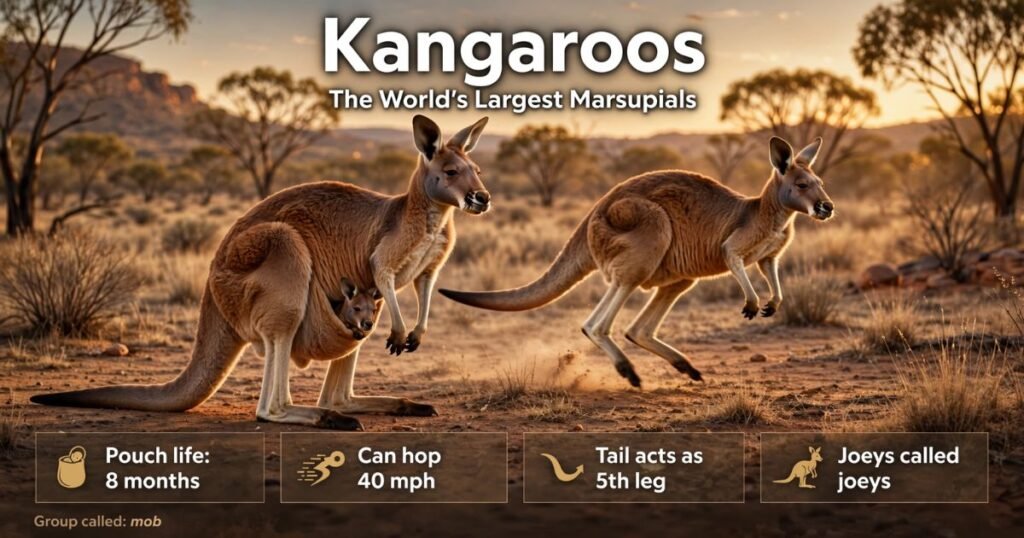
This dietary ability benefits their survival and supports the health of the grasslands, as their grazing habits help maintain growth cycles and biodiversity. Kangaroos are a social species. These animals often form mobs, demonstrating intricate social structures and communication methods that involve physical gestures and vocalizations. Their dynamic interactions offer insight into the evolution of social behaviors in wildlife.
Koalas
Scientific name: Phascolarctos cinereus
Class: Mammalia
Diet: Herbivore
Koalas are fascinating creatures, but they’re often overshadowed by their more famous Australian counterparts kangaroos. While many might wonder, do male kangaroos have pouches? The answer is no; pouches are exclusive to females who use them to nurture their young. Koalas, however, have their own unique adaptations that reflect their lifestyle.
These marsupials spend up to 20 hours a day sleeping in eucalyptus trees, a behaviour that helps conserve energy due to their low-calorie diet. What’s truly astonishing is their selective feeding; koalas can consume only a few species of eucalyptus, choosing leaves that are toxic to most other animals.
READ MORE: 25 Birds With Long Legs: Names, Facts & Pictures
Wallaby
Class: Mammalia
Diet: Herbivore
These are often overshadowed by their larger kangaroo cousins, and are remarkable marsupials that embody a unique charm and adaptability. These fascinating creatures thrive in diverse Australian habitats, from lush forests to arid plains.
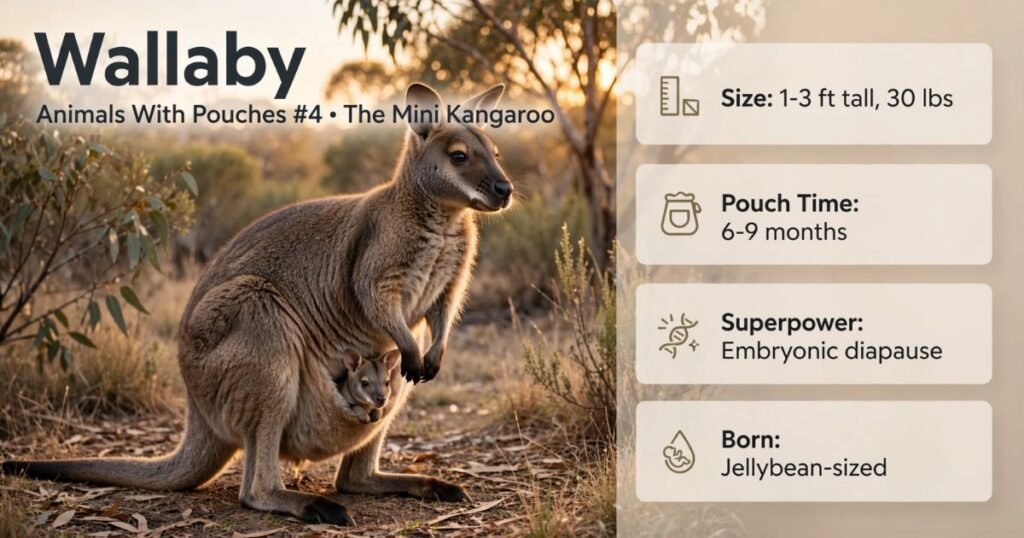
As marsupials, wallabies showcase a captivating reproductive strategy, carrying their young in pouches. This biological marvel allows for a prolonged developmental stage outside the womb, enhancing the survival chances of their offspring in the wild.
Tasmanian Devils
Scientific name: Sarcophilus harrisii
Class: Mammalia
Diet: Carnivore / scavenger
Tasmanian Devils are fascinating marsupials that embody the wild spirit of Australia’s islands. With their jaw-dropping bite strength, they can fracture bones, showcasing their fierce nature. Yet, beneath their fearsome reputation lies an incredibly complex social structure. They often gather in groups at carcasses; this communal feeding behavior highlights their intriguing dynamics, blending aggression and cooperation in equal measure.
These nocturnal scavengers play a vital ecological role in their habitats. As top predators, they help control populations of other species, ensuring a healthy balance in the ecosystem. However, Tasmanian Devils face significant threats, particularly from the devil facial tumor disease.
American Opossums
Scientific name: Didelphis virginiana
Class: Mammalia
Diet: Omnivore
American Opossums, often misunderstood, are nature’s quirky marvels. Marsupial cousins, the kangaroo, which have prominent pouches for carrying their young, do all kangaroos have pouches? This fact sparks curiosity about the unique reproductive strategies in the animal kingdom. Opossums take a different approach; their pouch isn’t as developed as a kangaroo’s, but it’s functional for nurturing their underdeveloped young.
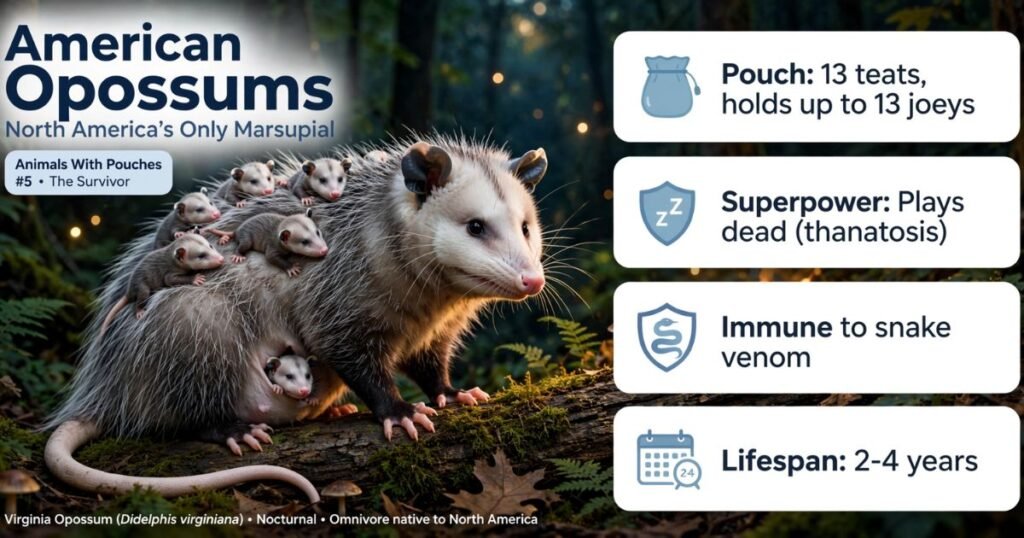
They are nature’s cleanup crew, voracious eaters of pests, ticks, and carrion, significantly reducing Lyme disease spread. Opossums are fascinating in their ability to thrive in diverse environments, adapting and flourishing even in urban landscapes.
Musky Rat Kangaroo
Scientific name: Hypsiprymnodon moschatus
Class: Mammalia
Diet: Omnivore / frugivore
The Musky Rat Kangaroo is a fascinating creature that challenges conventional perceptions of animals with pouches. Unlike its well-known cousins like koalas or kangaroos, the Musky Rat Kangaroo is relatively small, weighing in at just a few kilograms. This marsupial sports a unique set of characteristics that set it apart, including an agile physique and a specialized diet.
What’s particularly captivating about the Musky Rat Kangaroo is its arboreal behaviour. This animal doesn’t just hop; it climbs! Its strong hind legs and sharp claws make it an adept navigator of trees where it forages for fruits, seeds, and insects.
Echidna
Scientific name: Tachyglossidae
Class: Mammalia
Diet: Insectivore
These are often overshadowed by their more famous cousin, the platypus, representing an incredible evolutionary tale. These fascinating creatures, part of the group known as monotremes, are unique egg-layers that challenge conventional views of mammalian reproduction.
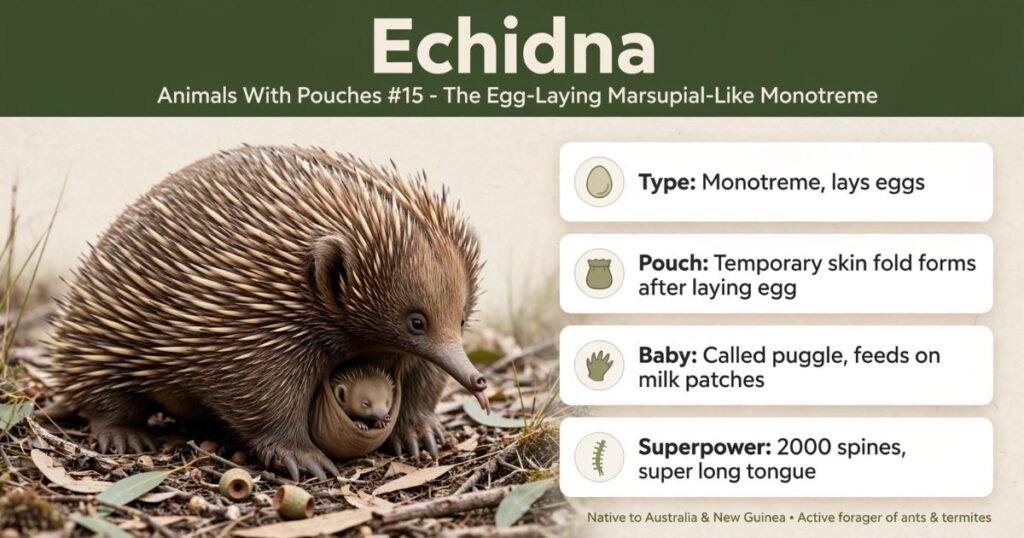
Animals with pouches like kangaroos, echidnas sport a spiny exterior and a long snout, allowing them to excel in foraging for ants and termites. Their adaptation to various Australian habitats showcases a resilience that many species envy.
What’s more, echidnas are equipped with a remarkable sense of smell, enhancing their hunting prowess. This ability provides insight into their behavior that’s often overlooked; rather than their spikes, it’s their keen intelligence that makes them truly captivating.
Sugar Gliders
Scientific name: Petaurus breviceps
Class: Mammalia
Diet: Omnivore
These are fascinating creatures that exemplify the beauty of nature’s diversity. As part of the group of animals that have pouches ,these tiny marsupials showcase an extraordinary adaptation: a membrane stretching from their wrists to their ankles, enabling them to glide gracefully through the trees. This gliding ability allows them to navigate their forest habitat with agility, avoiding predators while searching for nectar and fruits.
But what makes sugar gliders even more captivating is their strong social bond. Living in family groups, they engage in vocalizations that range from soft chirps to loud barks, communicating with both kin and potential mates.
Sea Horses
Scientific name: Hippocampus
Class: Actinopterygii
Diet: Carnivore
Sea horses are truly fascinating creatures, often overlooked in the vast ocean tapestry. Most fish, these enchanting animals with pouches defy typical categorizations, showcasing a unique reproductive twist where males carry and nurture the young. This role reversal in parenting doesn’t just challenge our perceptions; it opens the door to understanding the rich diversity of animal behavior in marine environments.
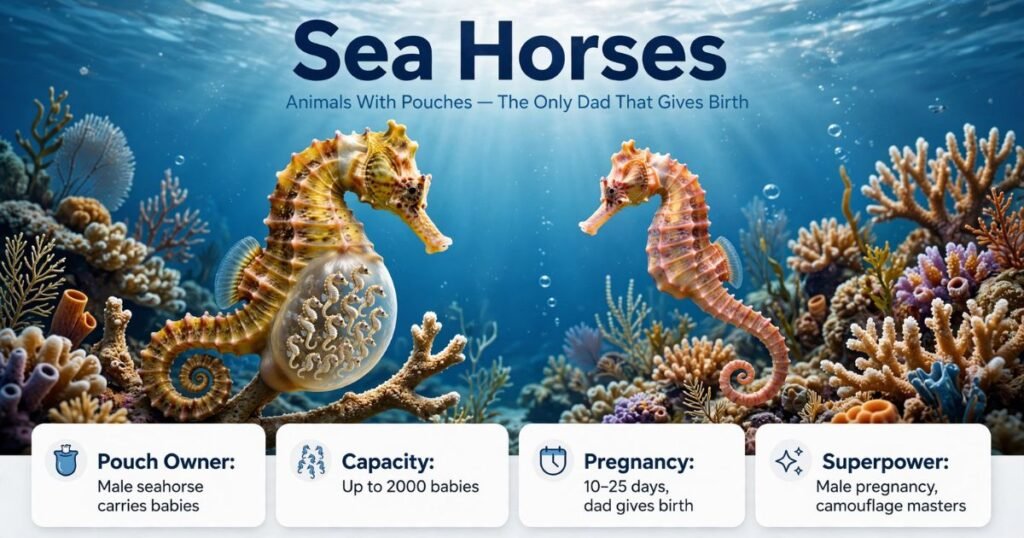
As masters of camouflage, sea horses dance adeptly with their surroundings, using their prehensile tails to anchor themselves among seaweed and coral. This aids in their survival and their evolutionary adaptations, allowing them to thrive in environments that many predators cannot navigate.
Quokkas
Scientific name: Setonix brachyurus
Class: Mammalia
Diet: Herbivore
These are often dubbed the “world’s happiest animals,” stand out among animals that have pouches for their charming smiles, and for their endearing behaviours. Found predominantly on Rottnest Island in Australia, these small marsupials have become a symbol of joy and curiosity.
Many of their pouch-bearing counterparts, quokkas exhibit an intriguing social structure, often engaging in playful interactions that seem almost childlike. They have an uncanny ability to draw visitors into their world, with their expressive faces and a demeanor that invites affection.
Wombat
Scientific name: Vombatus ursinus
Class: Mammalia
Diet: Herbivore
These are those charming marsupials with pouches for babies, are more than just cute bundles of fur; they’re ecological powerhouses in Australia’s unique ecosystems. Their robust bodies and strong limbs enable them to dig extensive burrows, providing shelter to countless other species while aerating the soil.
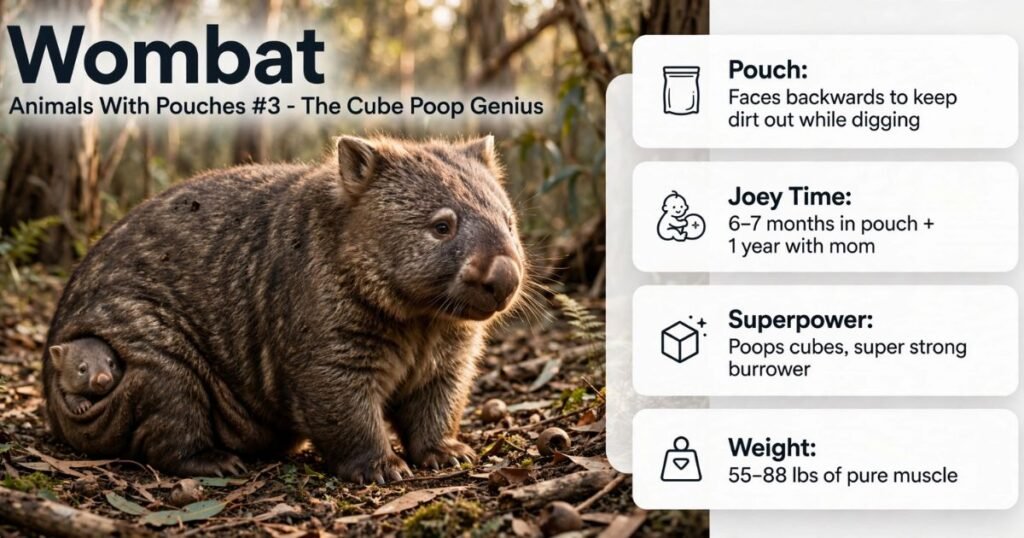
Wombats are known for their cube-shaped droppings, a fascinating adaptation that serves crucial purposes. This unique shape prevents the feces from rolling away, marking their territory effectively.
Tree-Kangaroo
Scientific name: Dendrolagus
Class: Mammalia
Diet: Herbivore
The tree-kangaroo presents a fascinating twist on our traditional image of kangaroos. Their land-dwelling relatives, these arboreal marvels have adapted to life high in the trees of New Guinea and Australia, showcasing an incredible evolutionary journey. With powerful limbs and a long, gripping tail, they navigate their canopy home with grace, reminding us that adaptability is key in the wild.
Wondering how many animals have pouches? The answer is a treasure trove of biodiversity! Besides kangaroos, they include wallabies, possums, and even koalas, each with unique adaptations. Tree-kangaroos add to this continuum, acting as a bridge between terrestrial and arboreal favorites.
ALSO READ: Top 18+ Most Annoying Animals In The World (With Pictures)
Numbat
Scientific name: Myrmecobius fasciatus
Class: Mammalia
Diet: Insectivore
The numbat, a unique marsupial native to Australia, stands out not just for its endangered status but for its fascinating behavior and diet. Many marsupials lack a typical pouch, which raises the question: what animals have a pouch?
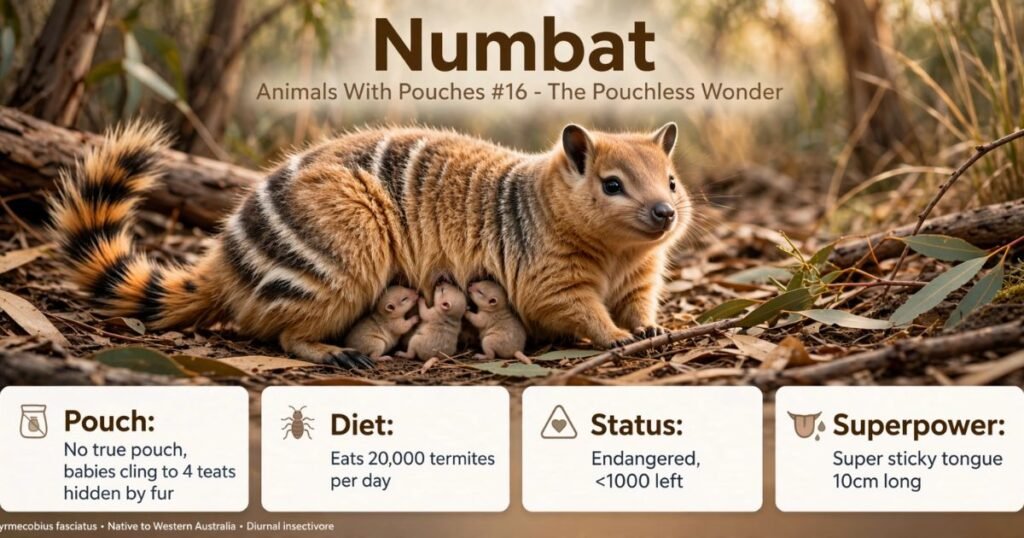
What’s captivating about the numbat is its striking appearance. With vibrant stripes and a sleek form, it resembles a small, wily creature from a fairy tale. Conservation efforts focus on preserving this species due to its diminishing habitat, marking it as a symbol for wildlife preservation.
Bandicoots
Class: Mammalia
Diet: Omnivore
These are intriguing marsupials occupy a unique niche in Australia’s diverse ecosystem. These small, nocturnal creatures are often overshadowed by more famous fauna like kangaroos and koalas, yet their ecological role is vital. With a keen sense of smell, bandicoots are expert foragers, feasting on insects, worms, and tubers, which help aerate the soil and promote plant growth.
Their digging habits not only support their survival but also contribute to the health of forest and grassland ecosystems. What sets bandicoots apart is their reproductive strategy. Many marsupials, bandicoots have relatively short gestation periods, allowing them to bring their young into the world quickly.
Quoll
Scientific name: Dasyurus
Class: Mammalia
Diet: Carnivore
The quoll, a lesser-known marsupial native to Australia and New Guinea, captivates with its striking appearance and elusive nature. With a coat adorned in white spots against a rich, dark fur, quolls are visually stunning and exemplify the remarkable adaptations of the marsupial family.
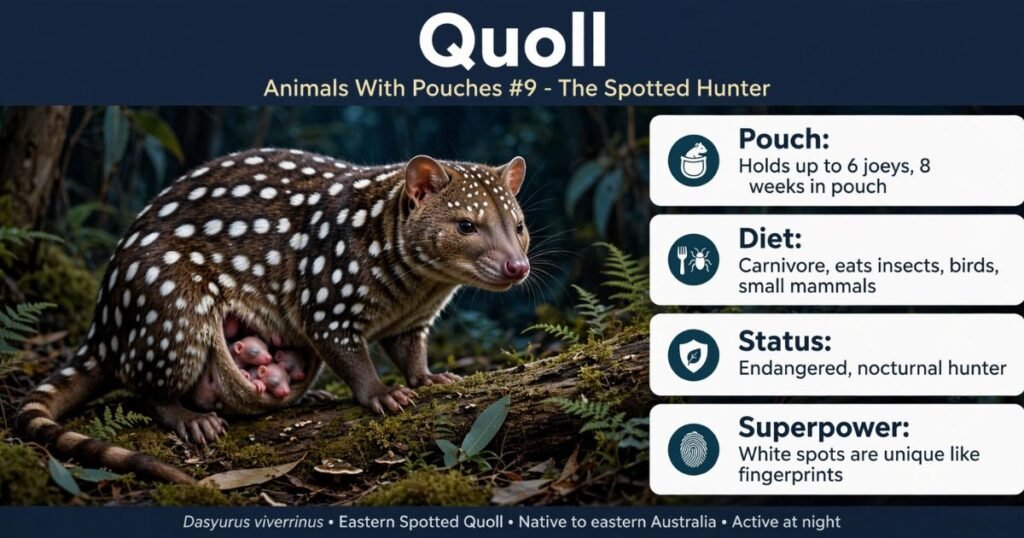
One fascinating aspect of quolls is their dietary versatility. They primarily feast on insects, they won’t shy away from small mammals or birds, showcasing a level of adaptability that speaks to their survival prowess. Quolls rely on their keen sense of smell to hunt, demonstrating the sensory sophistication often underappreciated in marsupials.
Bilby
Scientific name: Macrotis lagotis
Class: Mammalia
Diet: Omnivore
These, with their striking appearance and nocturnal habits, challenge our perceptions of mammals in the wild. Often overshadowed by more iconic creatures, these marsupials hold a crucial role in their ecosystems, particularly in the fragile environments of Australia.
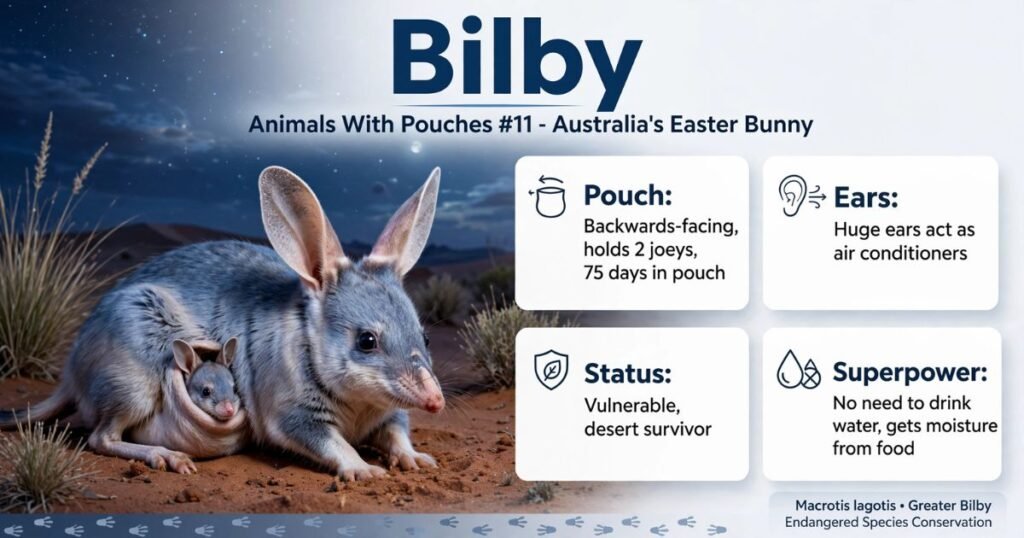
These fascinating creatures are adorable; they are ecological powerhouses. Digging extensive burrows, bilbies aerate the soil and promote nutrient cycling, benefiting an array of plants and animals in their habitat.
Final Thoughts
The fascinating world of pouch-bearing animals showcases the incredible diversity of nature. From the agile kangaroo to the adorable quokka, these unique creatures have adapted in remarkable ways to survive and thrive in their environments. The functionality pouches the ingenuity of evolution and serves essential roles in nurturing their young.
These animals deepen our appreciation for wildlife and the ecosystems they inhabit. Whether you’re a seasoned animal enthusiast or just a curious reader, take a moment to explore more about these extraordinary species and support wildlife conservation efforts to protect them.
FAQs
What’s the Biggest Animal with a Pouch?
The biggest animal with a pouch is the red kangaroo. These remarkable creatures can weigh up to 200 pounds and stand over 8 feet tall when measured from head to tail.
What Animals Stay in a Pouch?
Animals that stay in a pouch are primarily found among marsupials. This fascinating group includes species such as kangaroos, koalas, and opossums. The pouch serves as a safe haven for their young, allowing them to continue developing outside the womb while still relying on their mother’s nourishment.
What Animals go in Pouches?
Pouches are a fascinating adaptation found primarily in marsupials. Animals like kangaroos, koalas, and possum feature these unique structures, allowing them to carry and nurture their young during early development.