31 Animals That Live in Groups: Fascinating Social Animals With Pictures 2026
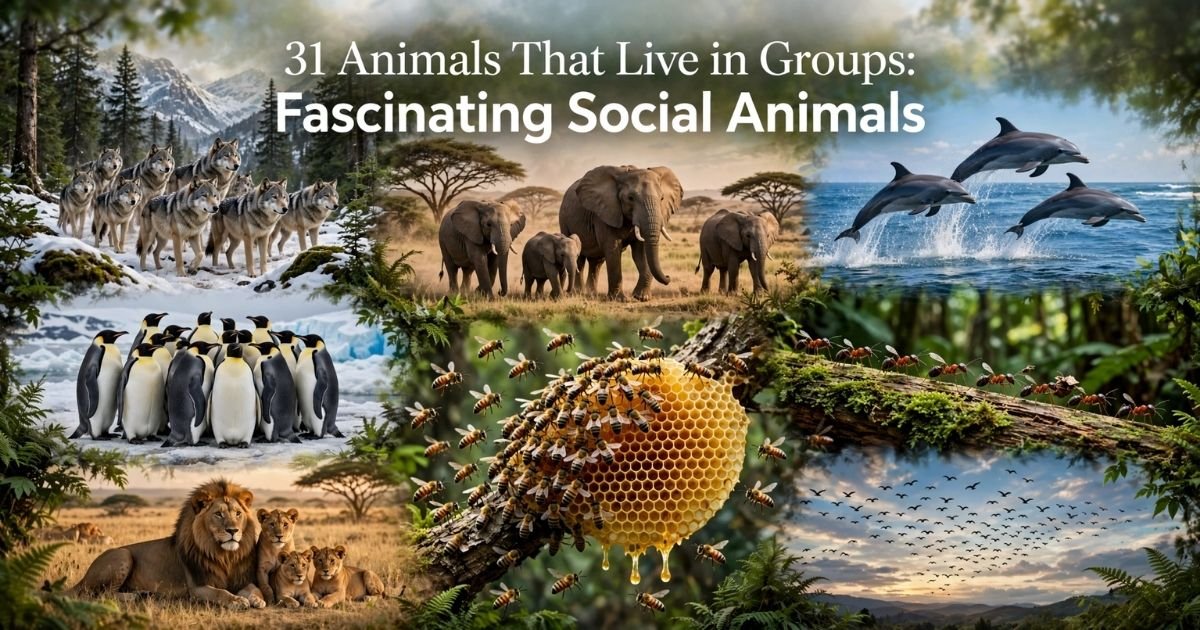
Did you know that some animal species thrive in social settings just like humans do? The intriguing world of Animals That Live in Groups, where cooperation and communication are key to survival.
Majestic elephants to tiny ants, these fascinating creatures showcase the power of community in the natural world. You’ll explore 31 captivating animals, complete with stunning pictures, that live harmoniously in groups and what that means for their survival and social dynamics.
List of Animals that Live in Groups
Here is the list of animals that live in groups:
- Dolphins
- Ants
- Prairie dogs
- Red Fox
- American Alligator
- African Wild Dogs
- Killer Whales/Orcas
- Chimpanzees
- Zebra
- Meerkats
- Raccoons
- Giraffes
- Horses
- Sheep
- Honeybees
- Rats
- Lions
- Sea Otters
- Guinea Baboon
- Crows
- Wolves
- Parrots
- Bats
- Elephants
- Jellyfish
- Spotted Hyenas
- Flamingos
- Emperor Penguins
- Gorillas
- Camels
- Deer
Dolphins
Scientific Name: Delphinidae
Class: Mammalia
Diet: Carnivore
These are intelligent creatures; they embody a social fabric that captivates us. As animals that live in groups, these marine mammals often form pods consisting of a few individuals to hundreds, showcasing their complex social structures.
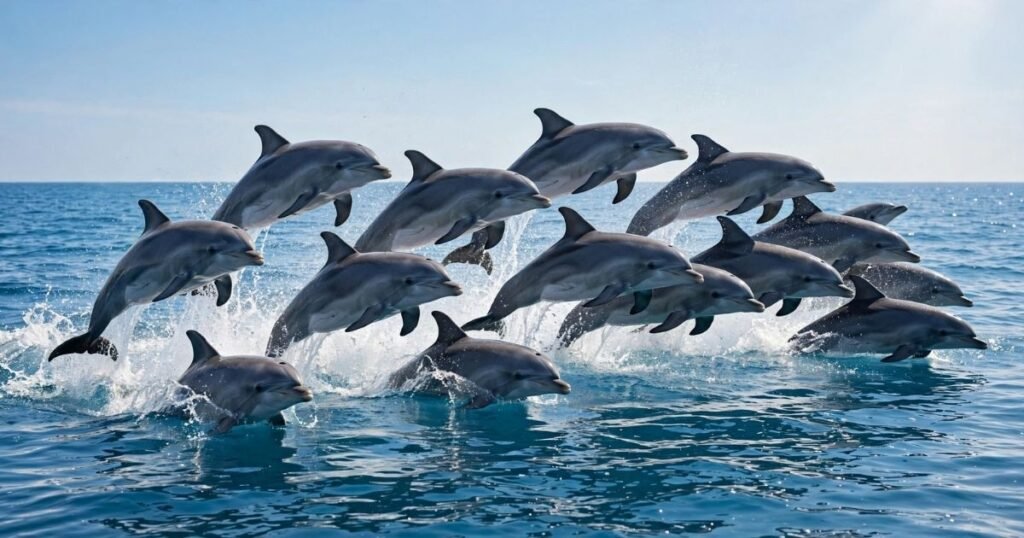
Within these pods, communication is key; they utilize a sophisticated array of clicks, whistles, and body language, demonstrating a level of interaction that rivals human social dynamics. Their ability to cooperate whether in hunting or fending off predators survival instincts but emotional bonds that can be deeply profound.
What truly sets dolphins apart is their emotional intelligence. They exhibit behaviors such as altruism, mourning, and even playful foolery, firmly establishing them as some of the most socially adept animals in the ocean. Scientists have observed instances of dolphins helping other species, revealing a side of empathy rarely seen in the animal kingdom.
Ants
Scientific Name: Formicidae
Class: Insecta
Diet: Omnivore
These exemplify the power of a community of animals, revealing complex social structures that challenge our understanding of individuality. These tiny architects and laborers operate with remarkable efficiency, often shaping entire ecosystems through their collective actions.
From nurturing their young to farming fungi, ant colonies demonstrate an intricate web of cooperation and specialization that rivals even the most advanced human societies.
What’s truly fascinating is their ability to adapt, communicate, and coordinate in ways that seem almost magical. Using a sophisticated language of pheromones, ants leave trails to food sources and communicate warnings, creating a communal response to threats.
Prairie Dogs
Scientific Name: Cynomys
Class: Mammalia
Diet: Herbivore
These are fascinating social creatures that epitomize the dynamic world of animals that travel in groups. Living in elaborate underground burrows, they create vibrant communities where each member has a role.
Their intricate communication system, consisting of various calls and body language, allows them to warn others of predators or organize community activities, showcasing a level of social intelligence that rivals many mammals.
Prairie dog colonies, known as “coteries**,” can vary significantly in size, some housing hundreds of individuals. These colonies create a bustling cityscape on the plains, offering a refuge for other wildlife, including the elusive black-footed ferret.
Red Fox
Scientific Name: Vulpes Vulpes
Class: Mammalia
Diet: Omnivore
These exhibit a fascinating social structure that sets them apart from many other canids. Unlike the solitary tendencies of their close relatives, these clever animals live in family units, displaying intricate social dynamics.
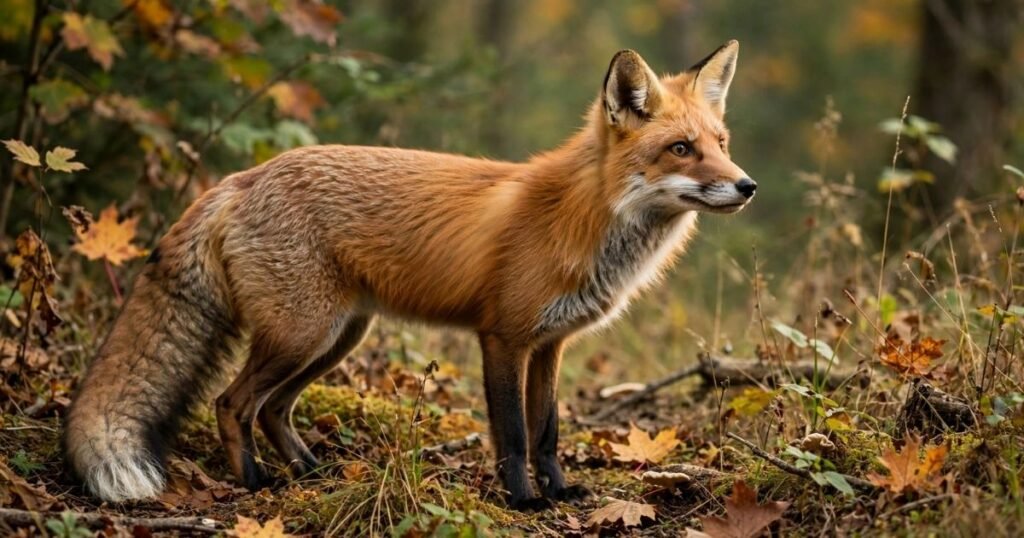
Living in groups allows them to share resources, protect their territory, and raise their young more effectively. When hunting, red foxes often collaborate with each other, enhancing their success rates in capturing prey.
Red foxes showcase remarkable adaptability, thriving in diverse environments ranging from urban landscapes to remote wilderness. This flexibility is vital for animals living in groups, as they can rapidly adjust their strategies and behaviors according to their surroundings.
American Alligator
Scientific Name: Alligator Mississippiensis
Class: Reptilia
Diet: Carnivore
The American Alligator is a fascinating apex predator and a creature that showcases surprising social behaviors. While typically seen as solitary hunters, these reptiles can display interesting group dynamics, especially during the mating season.
Nesting sites often become communal gathering spots, where males and females benefit from the safety in numbers. This behavior is particularly vital in environments where threats loom, allowing them to look out for one another while enjoying the advantages of being part of a social network.
The American Alligator contributes significantly to its ecosystem, acting as a keystone species. By digging bullae small ponds they create habitats that many other species rely on, from fish to birds. Their presence shapes the landscape, turning swamps into bustling hubs of biodiversity.
African Wild Dogs
Scientific Name: Lycaon Pictus
Class: Mammalia
Diet: Carnivore
These are a striking example of cooperative behavior in the animal kingdom. Known for their remarkable social structures, these animals that live in groups showcase an intricate hierarchy where every member, from the dominant pair to the pups, plays a vital role. Unlike many solitary predators, their success hinges on teamwork; they are some of the most efficient hunters on the continent.
What sets them apart is their exceptional communication skills. The dogs employ a range of vocalizations and body language to coordinate during a hunt, demonstrating a level of social intelligence that rivals that of more studied species like wolves.
Killer Whales/Orcas
Scientific Name: Orcinus Orca
Class: Mammalia
Diet: Carnivore
These are mesmerizing creatures that transcend typical marine life. Social animals that live in groups, they epitomize the strength of community, forming matrilineal pods that can consist of up to 40 individuals. Each pod boasts its own unique dialect, reflecting an intricate web of relationships and shared experiences.
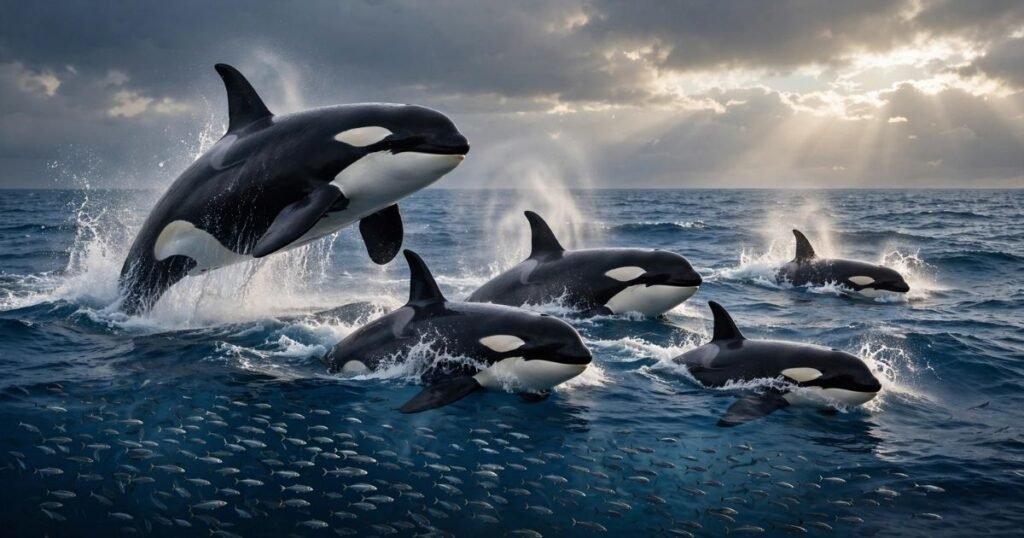
Their cooperative hunting strategies showcase an impressive blend of intelligence and teamwork, making them formidable predators. What’s truly fascinating is their ability to adapt culturally.
Orcas are incredible hunters and social learners. They pass down hunting techniques across generations, which means that each pod can develop distinct methods based on their environment. This adaptability reveals a complex social structure that challenges our understanding of animal intelligence.
Chimpanzees
Scientific Name: Pan Troglodytes
Class: Mammalia
Diet: Omnivore
These are primates; they are intricate social beings that provide a fascinating glimpse into our own humanity. Animals that stay in groups, chimpanzees thrive on social complexity, showcasing emotions that mirror our own from joy to grief.
When a mother loses her child, the entire community feels the ripple of loss, highlighting their deep-rooted empathy. This social structure fosters collaborative skills, enabling chimps to strategize for hunting or foraging, revealing a level of intelligence that goes beyond mere survival.
Their use of tools is a testament to their cognitive prowess; whether using sticks to extract termites or stones to crack nuts, chimps show us that innovation is not solely a human trait. Interestingly, their social hierarchies exhibit a blend of cooperation and competition, reflecting the dual nature of relationships that we often navigate ourselves.
Zebra
Scientific Name: Equus Quagga
Class: Mammalia
Diet: Herbivore
These fascinating members of the equine family are iconic for their striking black-and-white stripes; they offer a compelling glimpse into the intricate dynamics of social living. Animals that live in groups are called *herbivores*, and zebras embody this philosophy through their highly social behaviour.
This strong social fabric allows them to alert one another of nearby predators, showcasing an extraordinary level of cooperation in the wilderness. What sets zebras apart from other herd-living species is their unique bonding rituals.
The way they engage in mutual grooming not only solidifies social ties but also strengthens their collective resilience against threats. They exhibit *individual personalities*, which can affect group dynamics, showcasing a depth of character not always recognized in animal behavior studies.
Meerkats
Scientific Name: Suricata Suricatta
Class: Mammalia
Diet: Omnivore
These are fascinating social animals that thrive in close-knit communities, showcasing the incredible dynamics of cooperation. Known for their observant behaviour, these small mammals exhibit relationships that are both intricate and essential for survival. Living in groups, or mobs, can often enhance their ability to fend off predators and locate food.
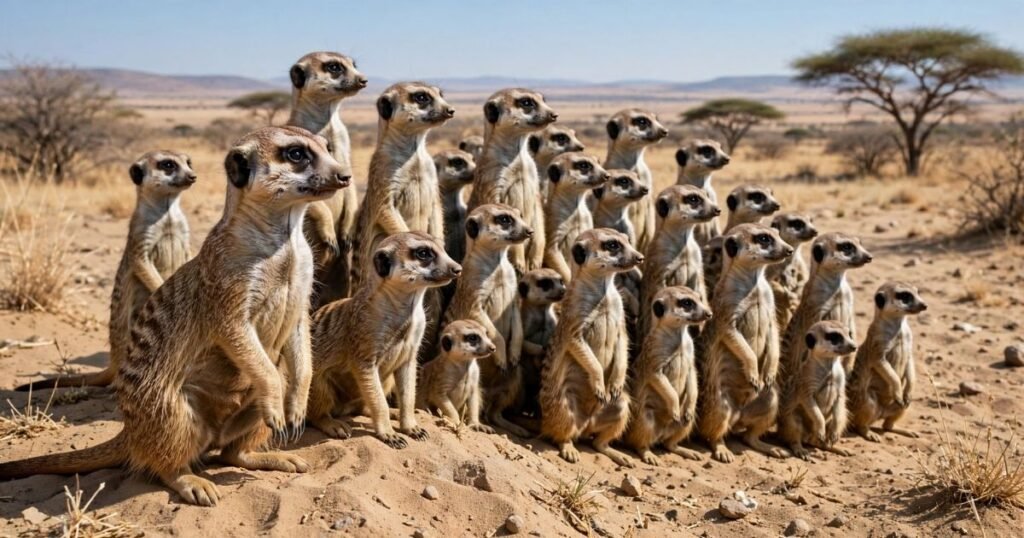
What sets meerkats apart is their unique sentinel behavior; one individual stands guard while others forage, a strategy that highlights the importance of teamwork.
This cooperative approach is not just survival, but a rich tapestry of social interaction, communication, and even play. Studies reveal that these animals can adapt their roles based on age and ability, demonstrating a surprisingly flexible social structure.
Raccoons
Scientific Name: Procyon Lotor
Class: Mammalia
Diet: Omnivore
These are truly fascinating creatures that exhibit remarkable social behavior. While often seen as solitary foragers, these adaptable animals thrive in groups, especially in urban settings where they navigate human environments with incredible agility.
Their ability to communicate with one another through a variety of vocalizations and body language helps them forge complex social networks. This adaptability facilitates foraging and enhances their survival skills as they can share information about food sources and potential threats.
Another captivating aspect of raccoon behavior is their dexterous manipulation of objects, a skill that stems from their highly sensitive paws.
Giraffes
Scientific Name: Giraffa Camelopardalis
Class: Mammalia
Diet: Herbivore
These often perceived as solitary giants roaming the savannas, actually display fascinating social dynamics. These majestic animals are communal, forming loose herds that provide safety in numbers and enhance social learning. Within these herds, giraffes engage in cooperative behaviors like grooming and even communicating through a complex system of body language and subtle sounds.
Their long necks, often a focus of fascination, play a crucial role not just in feeding but also in establishing relationships among members of the herd. What’s intriguing is the concept of hierarchy within these groups.
Dominant individuals often enjoy preferred access to resources, giraffes will lend a helping hand or rather, a long neck to younger or weaker herd members, showcasing their ability to forge bonds. This behavior underscores their intelligence and adaptability in the wild, transcending the simplistic view of them as mere wanderers.
Horses
Scientific Name: Equus Ferus Caballus
Class: Mammalia
Diet: Herbivore
These are magnificent creatures, embodying the spirit of teamwork, much like other animals that live in groups. Their natural behavior reveals a deep-rooted instinct to form social bonds, whether in the wild or under human care. A herd can be mesmerizing; each horse plays a role, from the dominant leader to the nurturing caretaker.
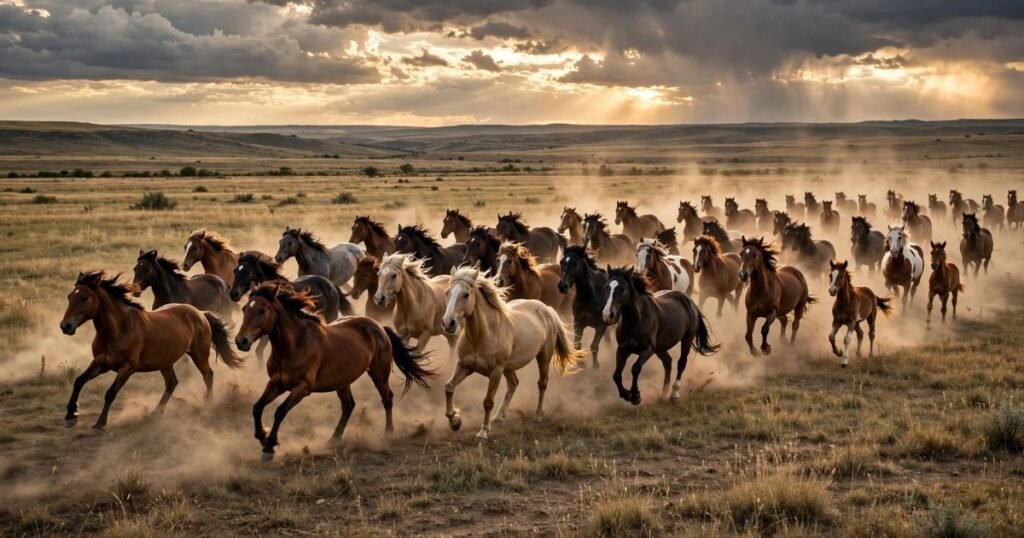
This complex social structure enhances their survival and fuels their emotional well-being. Horses communicate through subtle cues, showcasing their empathy and understanding within the herd. They can sense each other’s moods, responding to stress or joy with remarkable intuition.
Sheep
Scientific Name: Ovis Aries
Class: Mammalia
Diet: Herbivore
These are often dismissed as simple, docile creatures, their sociality reveals a complex tapestry of interaction. These fascinating animals form intricate bonds within their flocks, displaying a hierarchy that can rival those found in primate societies. Each sheep has unique relationships, recognizing members of their group and even establishing friendships.
This social structure helps them thrive in the wild, offering protection against predators through coordinated group movement and a shared vigilance. Studies have shown that sheep possess remarkable cognitive abilities, including problem-solving skills and emotional empathy.
This community-driven behaviour enhances their survival and invites us to reconsider their role in agriculture. Emphasizing animal welfare and understanding their social needs can transform sheep farming into a more compassionate and sustainable practice, enriching both the animals’ lives and the ecosystems they inhabit.
Honeybees
Scientific Name: Apis Mellifera
Class: Insecta
Diet: Herbivore
These are among the most social animals on the planet, embodying a unique blend of intricate communication and cooperative behavior. Each hive functions as a superorganism, with individual bees contributing to the *collective intelligence* of the colony.
Through a sophisticated dance known as the waggle dance foragers communicate the location of food sources and the quality and quantity, showcasing a remarkable social network that rivals even our own.
Honeybees play a crucial role in global ecosystems as pollinators, supporting biodiversity and food production. Their decline is not just a loss of honey; it’s a threat to the stability of our agricultural systems, affecting everything from almonds to apples.
Rats
Scientific Name: Rattus
Class: Mammalia
Diet: Omnivore
These are fascinating social animals, challenging the often negative perceptions they face. Living in complex communities, these creatures display a rich tapestry of social interaction, from grooming to sharing food. Unlike the solitary image many hold, rats thrive in groups, relying on their social bonds for survival.
They communicate through a variety of sounds, each conveying different emotions in an almost sophisticated language that speaks to their intelligence. Research shows that rats possess remarkable empathy, often responding to the distress of their peers.
They exhibit altruistic behaviors, sacrificing their own well-being to help others. This deep-seated social structure is not merely instinctual; it reflects a nuanced emotional world that deserves recognition.
Lions
Scientific Name: Panthera Leo
Class: Mammalia
Diet: Carnivore
These are the kings of the jungle; they are a remarkable study in social behavior in animals. Living in prides, these majestic creatures exhibit complex social structures that challenge our understanding of wildlife dynamics. Cooperation reigns supreme. Lions collaborate during hunts, using strategic positioning and a range of vocalizations to signal intent, heightening their chances of success.
This teamwork extends beyond hunting; it also includes nurturing the young, where lionesses share the responsibilities, ensuring that all cubs receive care and protection. What’s truly fascinating is the bond between pride members, characterized by intricate social hierarchies and relationships.
Adult females often form lifelong alliances, reinforcing their ties through grooming and shared duties. Males, on the other hand, may compete fiercely for dominance but will join forces to fend off threats from rival coalitions.
Sea Otters
Scientific Name: Enhydra Lutris
Class: Mammalia
Diet: Carnivore
These are often celebrated for their playful nature, and are fascinating animals that live in groups known as rafts. This social structure is charming; it plays a critical role in their survival. Rafts can consist of up to 20 otters, all working together to forage for food, such as sea urchins and crabs, showcasing a remarkable cooperative spirit.
These adorable marine mammals often hold hands while resting to prevent drifting apart, a behavior that highlights their strong social bonds. Their role as keystone species in coastal ecosystems cannot be overstated.
By preying on sea urchins, sea otters help maintain the balance of kelp forests, which provide habitat for countless marine organisms. This unique relationship creates a vibrant ecosystem, emphasizing that interconnectedness is crucial for environmental health.
READ MORE: Top 7 Deaf Animals and Their Amazing Adaptations (With Pictures) in 2026
Guinea Baboon
Scientific Name: Papio Papio
Class: Mammalia
Diet: Omnivore
The Guinea Baboon is a fascinating example of social dynamics in the wild. Known for their intricate group behaviors, these animals that travel in groups display remarkable cooperation and communication. Living in troops that can average from 20 to 50 individuals, Guinea Baboons exhibit a fascinating hierarchy, where alpha males protect but also guide their troop.
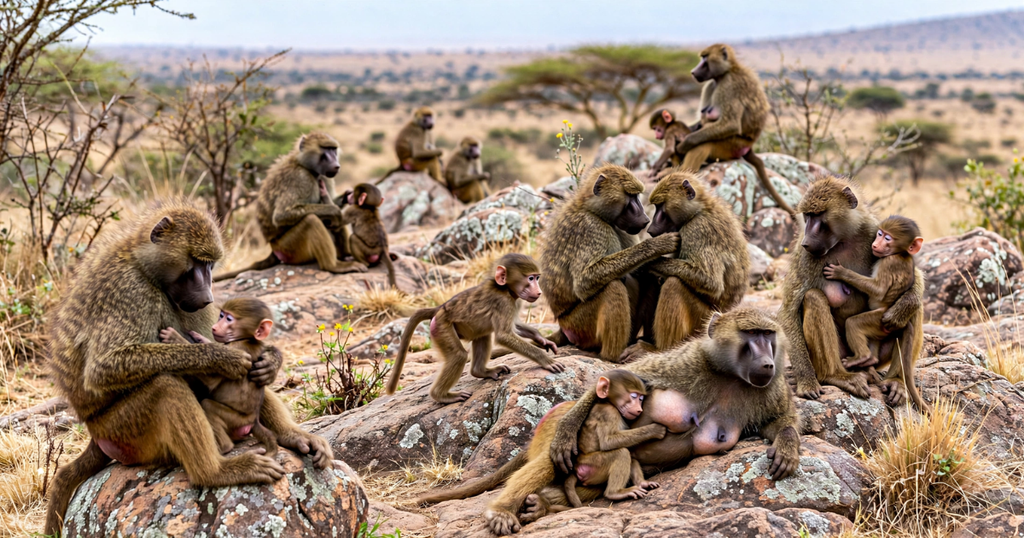
Their vocalizations and facial expressions serve as crucial tools for maintaining social bonds and alerting others to potential dangers in their environment. In addition to their social structure, Guinea Baboons are incredibly adaptable foragers. They primarily consume fruits, seeds, and small invertebrates, showcasing their omnivorous diet.
Watching them forage together reveals an intricate dance of trust and teamwork. They often use tactical movements to keep watch while others feed, illustrating an extraordinary level of awareness and camaraderie among them.
Crows
Scientific Name: Corvus
Class: Aves
Diet: Omnivore
These are ordinary birds; they belong to a fascinating category of animals that travel in packs. These intelligent creatures often gather in large groups, creating a mesmerizing spectacle in the sky. Their social dynamics are complex, demonstrating problem-solving abilities and even emotional depth.
Picture a clan of crows strategizing together, their raucous calls echoing as they communicate vital information about threats or food sources. What sets crows apart is their ability to recognize individual human faces.
They remember those who threaten them and will even warn others in their flock. This means that in any gathering, the social bonds formed transcend mere survival; they’re rooted in a sophisticated understanding of their environment and the beings within it.
Wolves
Scientific Name: Canis Lupus
Class: Mammalia
Diet: Carnivore
These are extraordinary pack animals, relying on intricate social structures that showcase loyalty and teamwork. A wolf pack operates almost like a family unit, emphasizing collaboration in hunting and survival. Within this hierarchy, each member plays a crucial role, reflecting a remarkable blend of individual skill and collective strength.
This sophisticated social dynamic allows wolves to adapt to their environments and thrive despite challenges, revealing much about their intelligence and emotional depth. Another fascinating aspect of wolves lies in their communication skills.
They possess a range of vocalizations, howls, barks, and growls each serving a distinct purpose: to rally the pack, alert others of danger, or mark territory. These vocal exchanges aren’t merely instinctual; they embody a rich language of connection and cooperation.
Parrots
Scientific Name: Psittaciformes
Class: Aves
Diet: Omnivore
These often celebrated for their vibrant feathers and remarkable vocal skills, are more than just colorful pets; they are complex beings with rich social lives. These intelligent creatures thrive in flock dynamics, similar to other animals that live in packs. In the wild, they form tight-knit communities that provide safety, social interaction, and learning opportunities, showcasing profound emotional bonds and intricate communication skills.
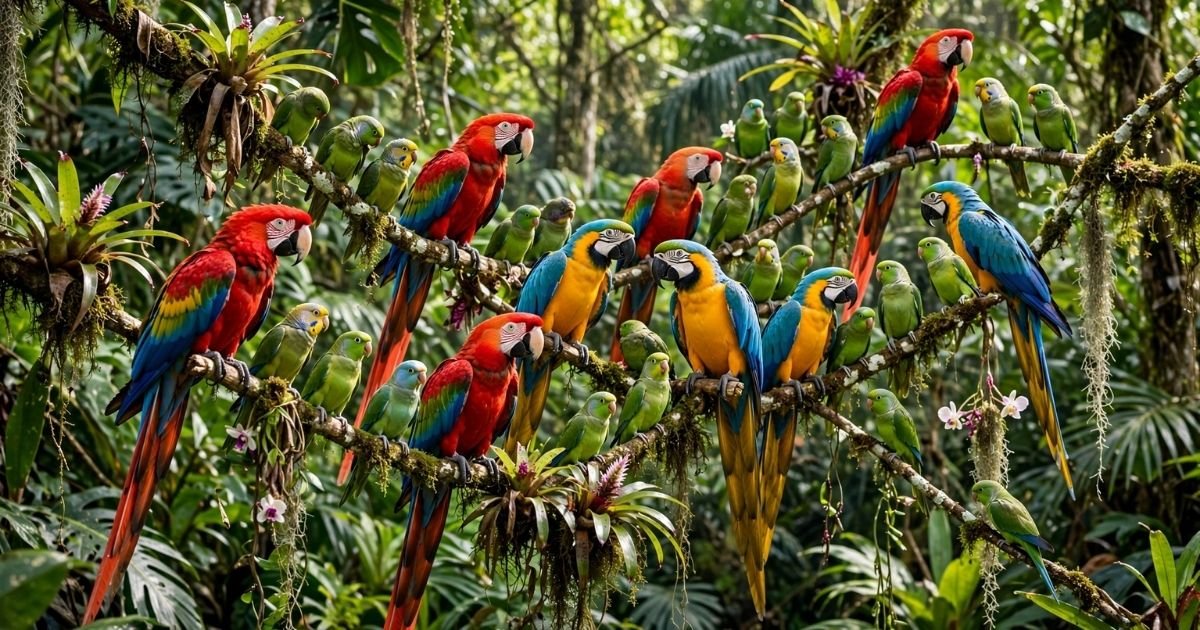
Their ability to mimic sounds isn’t just a party trick; it’s a social tool used to strengthen ties within their group and navigate the challenges of their environment. What’s fascinating is how their social structure mirrors that of animals like wolves and elephants.
Parrots utilize a hierarchical system where they learn from older members, akin to how young wolves learn hunting techniques from their pack leaders. This intricate learning process highlights their cognitive abilities, challenging the notion that intelligence is exclusive to mammals.
Bats
Scientific Name: Chiroptera
Class: Mammalia
Diet: Omnivore
These are the ultimate nighttime navigators, both fascinating and elusive. While many might associate them with spooky caves and Halloween decor, these creatures are vital players in our ecosystems.
Species, like the Mexican free-tailed bat, can consume thousands of insects in a single night, showcasing their role as natural pest controllers.The impact on agriculture if these tiny mammal powerhouses disappeared!
Bats challenge our perceptions of what it means to live in groups. Often misunderstood as solitary creatures, many species, especially the sanguine vampire bat, thrive in social hierarchies and exhibit remarkable social behaviors. They share food, groom each other, and even engage in cooperative breeding.
Elephants
Scientific Name: Loxodonta
Class: Mammalia
Diet: Herbivore
These are solitary giants; they are intricate social beings that thrive in tight-knit family groups. Matriarchs lead herds, embodying wisdom passed down through generations. The bonds formed within these groups are crucial, as they share caregiving duties and protect each other from threats.
Herd dynamics resemble those seen in other pack-living animals, such as wolves and lions, showcasing a deep-rooted instinct for cooperation and survival among species. Communication among elephants goes beyond mere trumpeting; they employ a complex system of vocalizations and even tactile gestures, fostering connections that can last a lifetime.
Infrasound, the low-frequency calls, can travel miles, allowing them to coordinate movements and alert fellow herd members about potential dangers. This intricate social web offers insight into how animals live in packs, highlighting the importance of community in both their lives and that of other species, like orcas and meerkats, who navigate their environments in groups.
Jellyfish
Scientific Name: Medusozoa
Class: Scyphozoa
Diet: Carnivore
These, often thought of as drifting specters in the ocean, reveal a fascinating complexity beyond their simple gelatinous forms. These mysterious creatures are among the few animals that travel in groups, forming mesmerizing blooms that can stretch for miles.
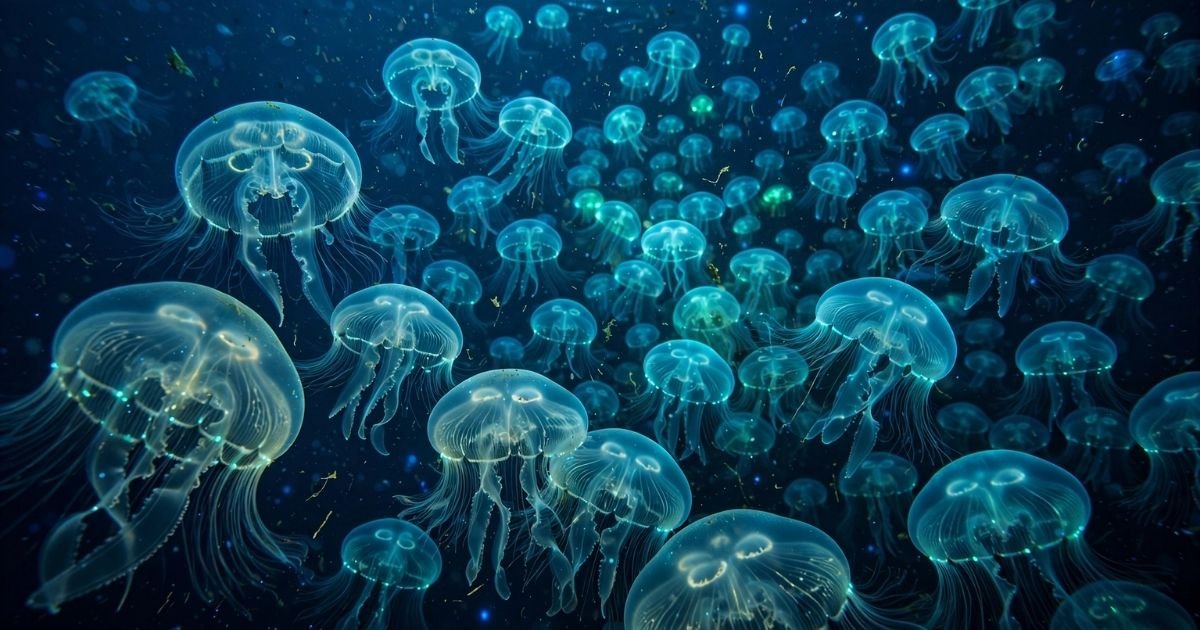
In these massive aggregations, they showcase a unique form of symbiotic survival, using the sheer numbers to evade predators and increase their chances of reproduction. There’s more to jellyfish than just their group dynamics. Their bioluminescent properties captivate researchers and ocean enthusiasts alike.
This ability enchants with stunning light displays and serves as a defense mechanism, confusing predators. For those lucky enough to encounter these ethereal beings in the wild, the experience is nothing short of otherworldly, a reminder of the ocean’s enigmatic beauty and the interwoven lives of organisms that share its vast depths.
You can also read: Explore Top 10 Most Humble Animals In The World (With Images)
Spotted Hyenas
Scientific Name: Crocuta Crocuta
Class: Mammalia
Diet: Carnivore
These, often misunderstood as mere scavengers, offer a fascinating glimpse into the complexities of social behavior. Why do animals live in groups? For hyenas, the answer lies in their incredibly sophisticated social structures, which rival those of primates.
Living in clans of up to 80 individuals, these intelligent creatures harness the power of cooperation to hunt and defend their territory. Their vocalizations, a mix of whoops, cackles, and grunts play a crucial role in maintaining clan cohesion and coordination during hunts.
Their matriarchal society challenges traditional views on dominance. Female hyenas are larger and more aggressive than their male counterparts, often wielding more influence within the clan. This unique dynamic showcases the importance of hierarchy and the benefits of social living, such as enhanced protection against predators and increased hunting success.
Flamingos
Scientific Name: Phoenicopterus
Class: Aves
Diet: Omnivore
These are a feast for the eyes; their social behavior reveals deep insights into why animals live in groups. Their stunning pink plumage is a byproduct of their diet, rich in carotenoids, but it’s their communal nature that truly captivates.
Nestled together in vast colonies, these birds demonstrate a complex dynamic where safety in numbers plays a critical role. In the face of predators, their sheer size and collective vigilance enhance survival probabilities.
The intricate wading patterns of flamingos serve more than just sustenance; they establish a rhythm of cooperation.They stir the water to unearth hidden delicacies, showcasing a remarkable example of mutualistic behavior that enhances food acquisition.
Emperor Penguins
Scientific Name: Aptenodytes Forsteri
Class: Aves
Diet: Carnivore
These exemplify the beauty of social structures in the animal kingdom. Many solitary species, these majestic birds thrive in large, cohesive colonies, showcasing the incredible power of community living. During the harsh Antarctic winters, emperor penguins gather in dense huddles, maximizing warmth and survival.
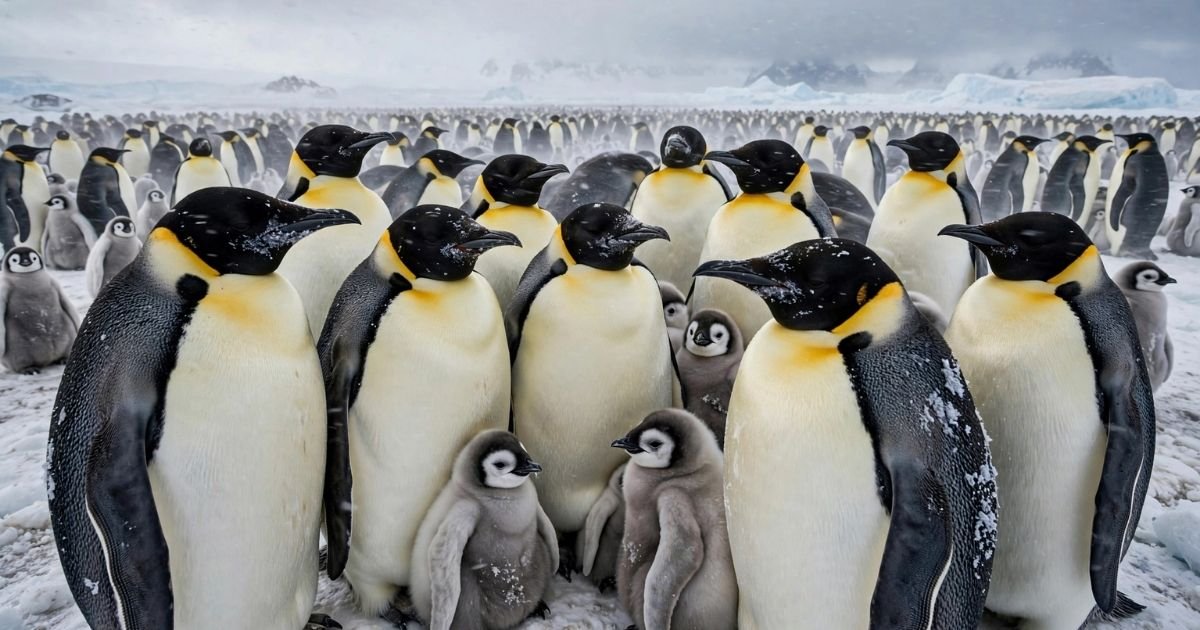
This cooperative behavior not only highlights their resilience but accentuates the importance of group dynamics among animals that live in groups. Remarkably, emperor penguins also demonstrate a deep commitment to parenting. Males endure weeks without food, incubating the precious eggs against their feet, while the females brave the treacherous ice in search of nourishment.
This fierce dedication underscores the intricate bonds formed within their communities, challenging the notion that survival is a solitary endeavor.
Gorillas
Scientific Name: Gorilla
Class: Mammalia
Diet: Herbivore
These are the majestic animals that live in groups, showcase a complex social structure that fascinates researchers and enthusiasts alike. These powerful primates exhibit a rich tapestry of relationships within their troops, often led by a dominant silverback male. Beyond mere hierarchy, these connections enable emotional bonding and cooperative behaviors that sustain their communities.
A gorilla troop reveals moments of nurturing and play that underscore their capacity for empathy a refreshing perspective that challenges the notion of survival as a solitary endeavor in the animal kingdom.
The group dynamics of gorillas extend far beyond mere protection. They engage in intricate communication, employing a range of vocalizations, gestures, and facial expressions to express their feelings and intentions. This nuanced language allows them to negotiate complex social interactions, ensuring harmony and cohesion within the group.
Camels
Scientific Name: Camelus
Class: Mammalia
Diet: Herbivore
These are often dubbed the “ships of the desert,” are fascinating creatures that exemplify remarkable adaptation. These majestic beasts possess unique physiological traits that allow them to endure extreme arid conditions.
Their humps store fat, providing much-needed energy, while their ability to conserve water makes them true marvels of survival. Why animals live in groups becomes clearer when observing camel herds, as they showcase intricate social structures that enhance their resilience.
Living in groups offers protection from predators and strengthens bonds essential for nurturing the young. In camel society, mothers communicate through distinct vocalizations, ensuring their calves remain close, fostering both safety and social learning.
Deer
Scientific Name: Cervidae
Class: Mammalia
Diet: Herbivore
These are remarkable social creatures that thrive in herds, showcasing the intricate dynamics of group living. These fascinating animals live in groups primarily for protection; numbers provide safety from predators and increased chances of survival.
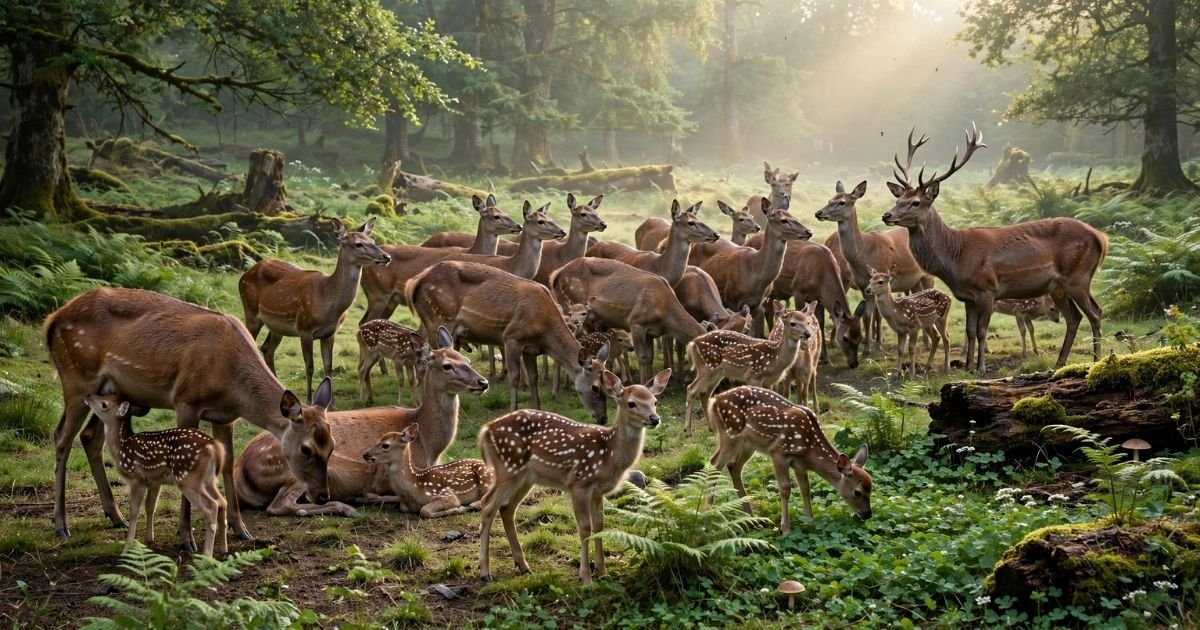
The structure of these groups can vary significantly by species and environment, ranging from the tightly-knit family units of doe and fawn to larger gatherings during the mating season when males engage in impressive displays of strength and dominance.
Communal living also enhances their foraging success. When deer roam together, they can cover ground more efficiently, sharing information about abundant food sources. This cooperative behavior is not just pragmatic; it highlights a social intelligence that’s often overlooked.
Final Thoughts
The world of social animals is both captivating and diverse. From the tightly-knit wolf packs to the mesmerizing schools of fish, the ways these creatures interact highlight the importance of community in the animal kingdom. Their cooperative behaviors enhance their survival but also showcase the intricate web of relationships that exists in nature.
These animals can deepen our appreciation for the interconnectedness of all life. The next time you observe wildlife, take a moment to appreciate their social dynamics. It’s a fascinating journey worth exploring!
FAQs
What are animals that live in groups?
Animals that live in groups are found across numerous species, showcasing fascinating social behaviors. Social insects like ants, bees, and termites are prime examples. They operate as a cohesive unit, working together in highly organized colonies.
Can you give me 200 names of animals?
A diverse collection of 200 animal names from various categories.
We have Mammals like Elephant, Lion, Tiger, Dog, and Kangaroo. Next, let’s explore Birds such as Eagle, Parrot, Penguin, Sparrow, and Owl. Don’t forget about marine Life like Shark, Dolphin, Octopus, Jellyfish, and Whale.
What are some examples of social animals?
Social animals are species that thrive on interaction and cooperation within their groups. A classic example is the wolf, which hunts in packs, relying on teamwork to take down larger prey and strengthen social bonds.
What are the 8 animal groups?
The 8 animal groups can be broadly categorized based on their characteristics and classification. These groups are:
Mammals
Birds
Reptiles
Amphibians
Fish
Insects
Arachnids
Crustaceans